Facts on this page come from registry rules, published research, AVS rules and news reports, checked in November 2026. Each one links to its source.
What a Maine Coon mix is
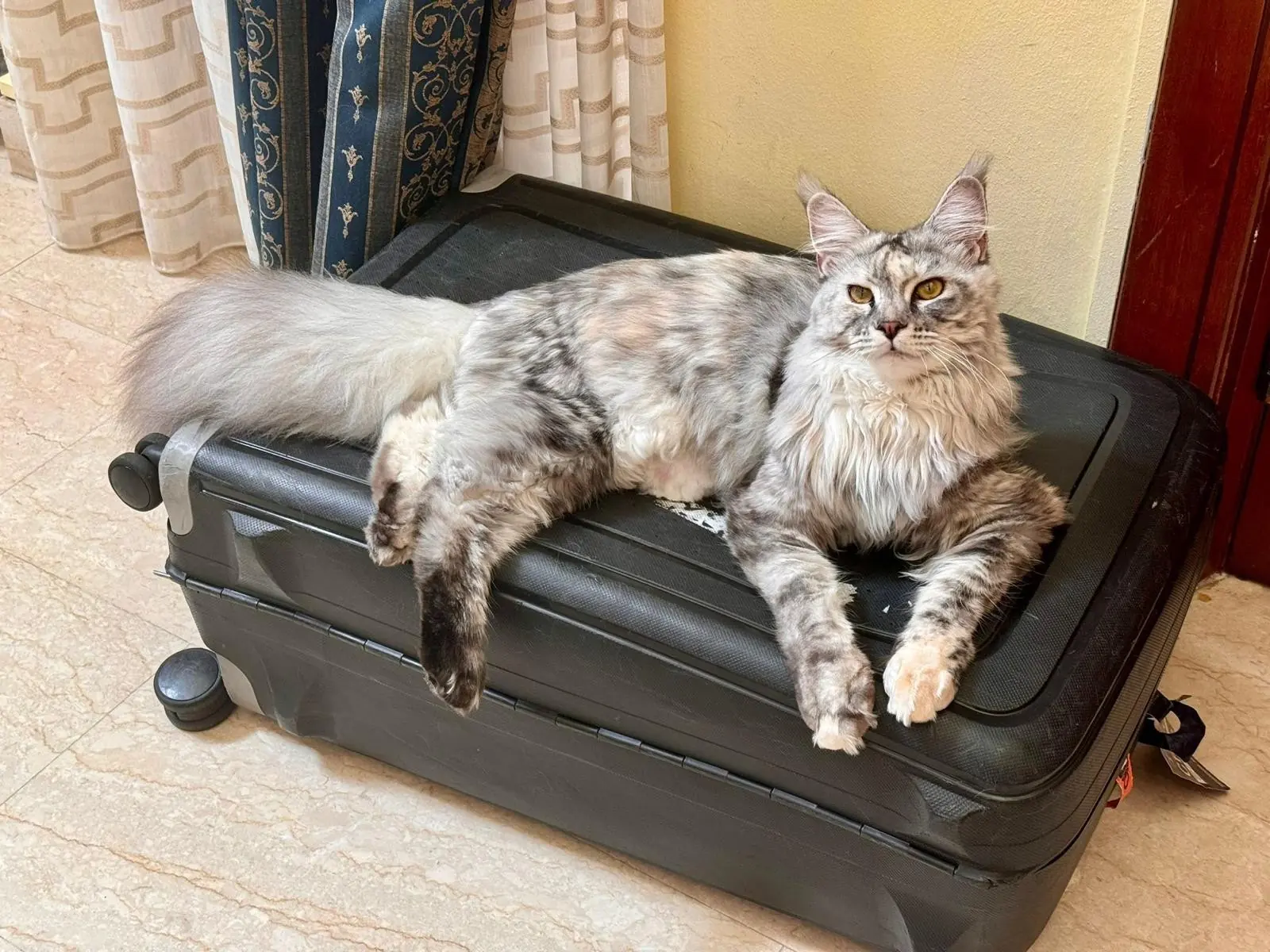
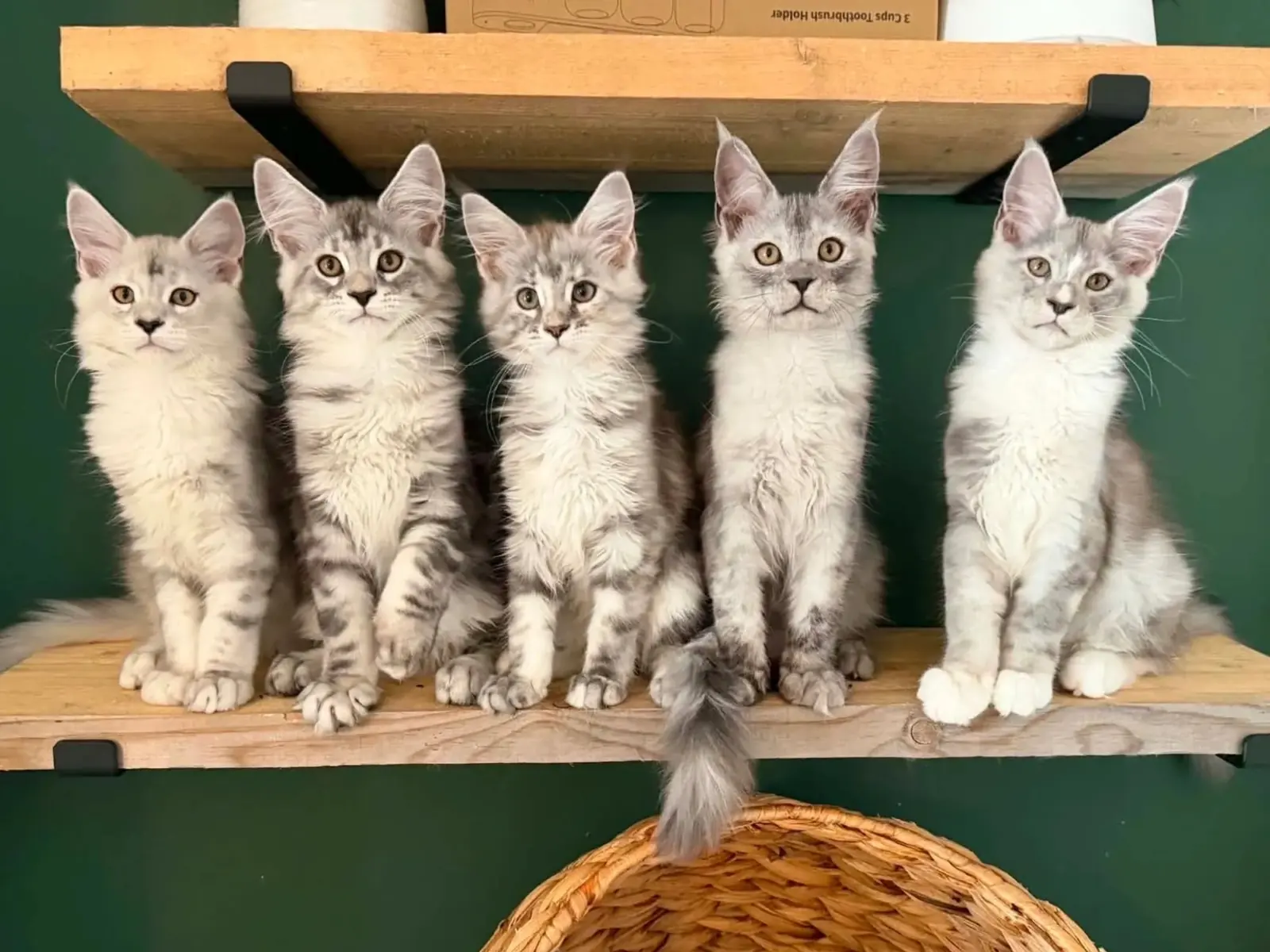
A Maine Coon mix is a cat with Maine Coon ancestry and another breed in its family, such as a Ragdoll or a Persian. A purebred Maine Coon cat has only Maine Coons in its pedigree.
No major registry accepts these crosses. FIFe's rules prohibit any crossing with other breeds, and chocolate, lilac or pointed kittens go on its books as XLH, a non-recognised longhair (FIFe rules). The World Cat Congress lists no allowable outcrosses for seven member registries, TICA and GCCF among them (World Cat Congress), and CFA disqualifies colours that show hybridisation (CFA).
So a Ragdoll or Persian cross has no breed pedigree, and what you are told about its parents rests on trust or lab reports. The label is also put on long-haired cats that only look like Maine Coons. What the crosses are like is described only on commercial breed-guide sites, which repeat each other and cite no studies (Catster, Maine Coon Central). Size, face and temperament can't be predicted from one litter.
Ragdoll and Persian mixes: what genetics predicts
Genetics gives firmer answers than the breed guides. Our Maine Coon vs Ragdoll guide compares the pure breeds.
- Hidden colourpoint (Ragdoll mixes). The Ragdoll's pointed pattern is recessive. In a cross with a Maine Coon that doesn't carry it, every kitten is full-coloured and carries one copy. Two carriers have about 25% pointed, blue-eyed kittens (UC Davis VGL), so the gene can stay hidden for a generation.
- Two HCM variants (Ragdoll mixes). HCM is a heart disease with a known gene variant in each breed: A31P in the Maine Coon and R818W (also called R820W) in the Ragdoll. A cross can inherit either, and the Maine Coon HCM test detects only A31P (UC Davis VGL), so it needs both tests.
- PKD1 (Persian mixes). Persian-type polycystic kidney disease is dominant, so a kitten with a PKD1-positive parent has a one-in-two chance of inheriting it (UC Davis VGL). Ask for a negative PKD1 result for the Persian parent.
Why looks and DNA tests can't prove breed
The Maine Coon's DNA groups with Western European random-bred cats (Kurushima et al. 2013, UC Davis via Phys.org), so a long-haired domestic cat can look the part. Maine Coons also keep growing for three to five years (CFA, TICA), so a 12-week kitten's adult size and type can't be judged.
Consumer DNA tests don't settle it. Basepaws says its Breed Index "is not a breed test" and can't be used to register a cat (Basepaws). Wisdom Panel publishes no accuracy figure and positions its test as the best option only for cats without registry papers (Wisdom Panel). In a 2013 study of 477 cats from 29 breeds, DNA placed cats in the right breed 78 to 88% of the time, with more errors in often-outcrossed breeds such as Ragdolls and Persians (Kurushima et al. 2013).
How to read a pedigree
What proves a purebred is a pedigree you can check, and FIFe's rules make a good checklist. A FIFe pedigree carries the FIFe logo and the issuing club's signature. It gives the cat's name, birth date, sex, registration number, EMS colour code and breeder, and four generations of ancestors, with the parents' microchip numbers (FIFe rules).
A FIFe registration number shows which register the cat is on:
(SE)country code
SVERAKFIFe member club
LOpure-bred register
nnnnthe cat's number
LO means at least three generations of pure breeding, and crosses go on the RX register. No cat may carry a cattery name other than its breeder's, so the cattery name should match the one the seller gives (FIFe rules).
Our kittens come from partner catteries in Europe, and their pedigrees are issued by WCF, TICA or CFA, depending on the cattery. Whatever the registry, check its name, the registration number and Maine Coons in every generation.
Pedigree, DNA test or health test: what each proves
A seller may show you three kinds of paper. Each proves something different.
| Paper | Pedigree | Breed DNA test | Health DNA test |
|---|---|---|---|
| What it shows | Registered ancestors | How close the DNA is to breed samples | One gene variant, such as HCM A31P |
| Who issues it | A registry: WCF, TICA, CFA, FIFe, GCCF | A consumer lab, such as Basepaws | A lab, such as UC Davis VGL |
| Proves a purebred | Yes, once the registry confirms it | No | No |
| How to check it | Ask the registry directly | No registry we found accepts it | MyVGL or PawPeds |
| Limits | Doesn't show the kitten is healthy | 78–88% accurate in research | Covers only the variant tested |
Sources: FIFe, Basepaws, Kurushima et al. 2013, UC Davis VGL, PawPeds.
Red flags and green flags in Singapore
You're asked to pay before you get an address or a viewing.
An address you can visit, and deposit and refund terms in writing.
No AVS licence number in the advert, or one missing from AVS's list.
A licence number on AVS's list, approved for cats (C).
A kitten under 12 weeks, or no signed vaccination card with its chip number.
At least 12 weeks old, a signed vaccination card, and the chip scanned in front of you.
A pedigree or DNA certificate that the registry or lab can't confirm.
A pedigree the registry confirms, and health reports you can check at the source.
A kitten sold as imported with no import permit to show you.
The AVS import permit, shown to you before you pay.
Pressure to pay fast, or a deal that looks too good to be true.
A written sales agreement, and the licence moved to you on PALS at handover.
Our summary of the AVS pet shop conditions, police advice and the cases below.
Recent Singapore cases
Illegal home breeding. A couple bred Ragdolls in an HDB flat in Jurong West: six litters and 30 kittens, advertised online. In November 2025 each was jailed for a week and fined, reportedly the first time jail was sought for illegal pet breeding. One of them held a pet shop licence, which allowed only kittens from AVS-licensed pet farms (Mothership). A website, or even a pet shop licence, doesn't make every kitten legal.
The first jail sentence for pet smuggling. It came in August 2026. One of the cases reported involved 13 illegally imported animals, including two British Shorthair cats smuggled from Thailand through Malaysia. NParks warned that buyers who abet an illegal import may be prosecuted (Mothership).
Fake adoption groups. In 2024 a cat rescue group warned of fake Facebook groups that used pure-bred kittens as bait, asked for a deposit before giving a viewing address, then disappeared (The Straits Times via The Star).
Fake DNA certificates. In 2026, DNA tests on puppies sold by a Singapore pet shop as mini goldendoodles found no golden retriever DNA, and one buyer said the parents' DNA certificates were declared fake by the organisation named on them. CASE advised asking for parentage tests before paying (Mothership).
The legal checklist
AVS's pet shop conditions for cats, effective 15 August 2025, give you simple checks (AVS conditions):
- Licence number in every advert, online too (condition 38).
- At least 12 weeks old, twice vaccinated and rested a week after the second vaccination (condition 12).
- A vaccination card with the chip number and the vet's name and signature (condition 14).
- Proof of source, such as the AVS import permit (condition 18).
- 72 hours' rest after arrival before an imported kitten is sold (condition 24).
- Transfer first: the kitten can't leave until you accept the change of ownership on AVS's PALS system (condition 25).
To check a licence in a minute:
- Find the number in the advert. It looks like AS24E00026: AS, two digits, a letter and five digits.
- Look it up in the list on AVS's public registry of licensed pet shops, and match the company name.
- Look for C, which means approved for cats.
- Check the revoked list as well.
The list of 311 active shops, updated 15 September 2026, includes ours: AS24E00026, MAINECOON CATTERY SG, approved for cats (AVS registry).
An HDB flat may keep two cats, and any cat acquired from 1 September 2024 counts, so a flat with two can't add a third (AVS). Every pet cat also needs a licence: see our cat licence guide.
Questions to ask any seller
- What is your AVS licence number? Then check it on AVS's list.
- Which registry issued the pedigree? Ask to see it, and confirm it with the registry.
- Can I see the parents' health reports? Ask for the case numbers and report IDs to check on MyVGL, or the PawPeds records.
- Where did the kitten come from? Ask for the import permit, or the name of the AVS-licensed breeder.
- Can I see the vaccination card? Check the age, the two vaccination dates, and that the chip number matches the pedigree and a scan.
- Will you transfer the licence on PALS at handover?
- What are the deposit and refund terms? Get them in writing before you pay.
Why buy from an AVS-licensed pet shop
An AVS-licensed pet shop has to meet every condition above. Our licence is AS24E00026. Our kittens come from partner catteries in the UK, France, Germany and Denmark, as our European Maine Coon guide explains, and each one comes with its pedigree and a copy of its parents' genetic test results.
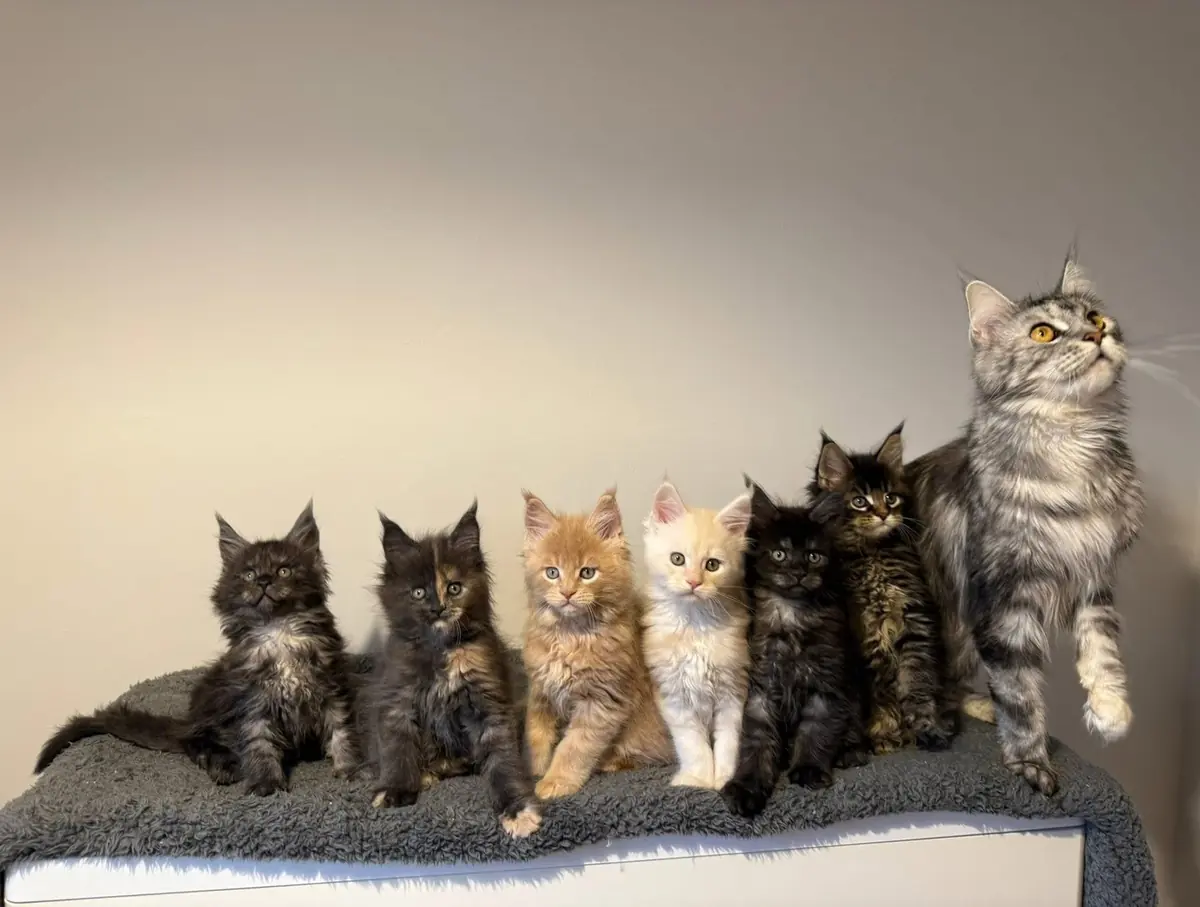
Our reservation policy sets out in writing what you pay, when, and when you get your money back. Bring the questions above to a private viewing at our shop in Joo Chiat. Our litters come in a mix of colours: see who is available on our Maine Coon kittens page or on Instagram @mainecoon.sg, and find more answers in our FAQ.
Questions about Maine Coon mixes
Is a Maine Coon Ragdoll mix a breed?
No. No registry we checked allows a Maine Coon to be crossed with another breed, and FIFe's rules prohibit it, so a Ragdoll and Maine Coon cross has no breed pedigree. It is a mixed-breed cat, and its size, looks and health can't be predicted from one litter. A Ragdoll cross can also carry the hidden colourpoint gene and either of two HCM variants.
Can a DNA test prove a cat is a purebred Maine Coon?
No. Basepaws says its Breed Index is not a breed test and can't be used to register a cat, and in a 2013 study DNA placed cats in the right breed only 78 to 88% of the time. A pedigree that the issuing registry confirms is what proves a purebred. Health DNA tests, such as the HCM test, check one gene variant and say nothing about breed.
What papers should come with a Maine Coon kitten?
A pedigree from a registry such as WCF, TICA, CFA, FIFe or GCCF, and a vaccination card with the microchip number and the vet's name and signature. Ask for copies of the parents' health test reports too, and check them on MyVGL or PawPeds. The shop must also transfer the kitten's licence to you on PALS before handover, and for an imported kitten it must hold the AVS import permit.
What should a seller show me for an imported kitten?
The AVS import permit, which a licensed pet shop must keep as proof of where the kitten came from, plus the vaccination card with the microchip number and the vet's signature, and the pedigree. In Singapore a kitten must be at least 12 weeks old before it can be sold. Ask to see the papers before you pay.
How do I check a pet shop's AVS licence?
Find the licence number in the advert, because every licensed pet shop must show it. Look it up in AVS's public list of licensed pet shops, check that the company name matches and that the shop is approved for cats (C), and make sure the number isn't on the revoked list. Our licence is AS24E00026.
See who is available now, or visit our cattery in Joo Chiat by appointment.