Facts on this page come from the Maine Coon breed standards of FIFe, WCF, GCCF, CFA and TICA and from published genetics and veterinary studies, checked in November 2026. Each one links to its source.
How Maine Coon colour works
Every colour a Maine Coon cat can have starts from just two pigments, black and red. A handful of genes then soften them, add a pattern and decide how much white the cat has. Think of it as two paints and a few switches.
- Black or red. The orange gene, which sits on the X chromosome, turns black pigment red. Its cause was only found in 2025, by teams at Kyushu University and Stanford (Kaelin et al. 2025, Science News).
- Full strength or dilute. The dilute gene softens black to blue (grey) and red to cream (GCCF).
- Tabby or solid. The agouti gene decides whether the tabby stripes show. Red is the exception: a red cat nearly always shows some stripes.
- Silver or not. The silver gene takes the colour out of the base of each hair, which gives silver tabby, smoke, shaded and shell (University of Missouri).
- How much white. A white-spotting gene adds white patches, and a dominant white gene makes the whole cat white and hides its colour underneath (David et al. 2014).
Black and black smoke
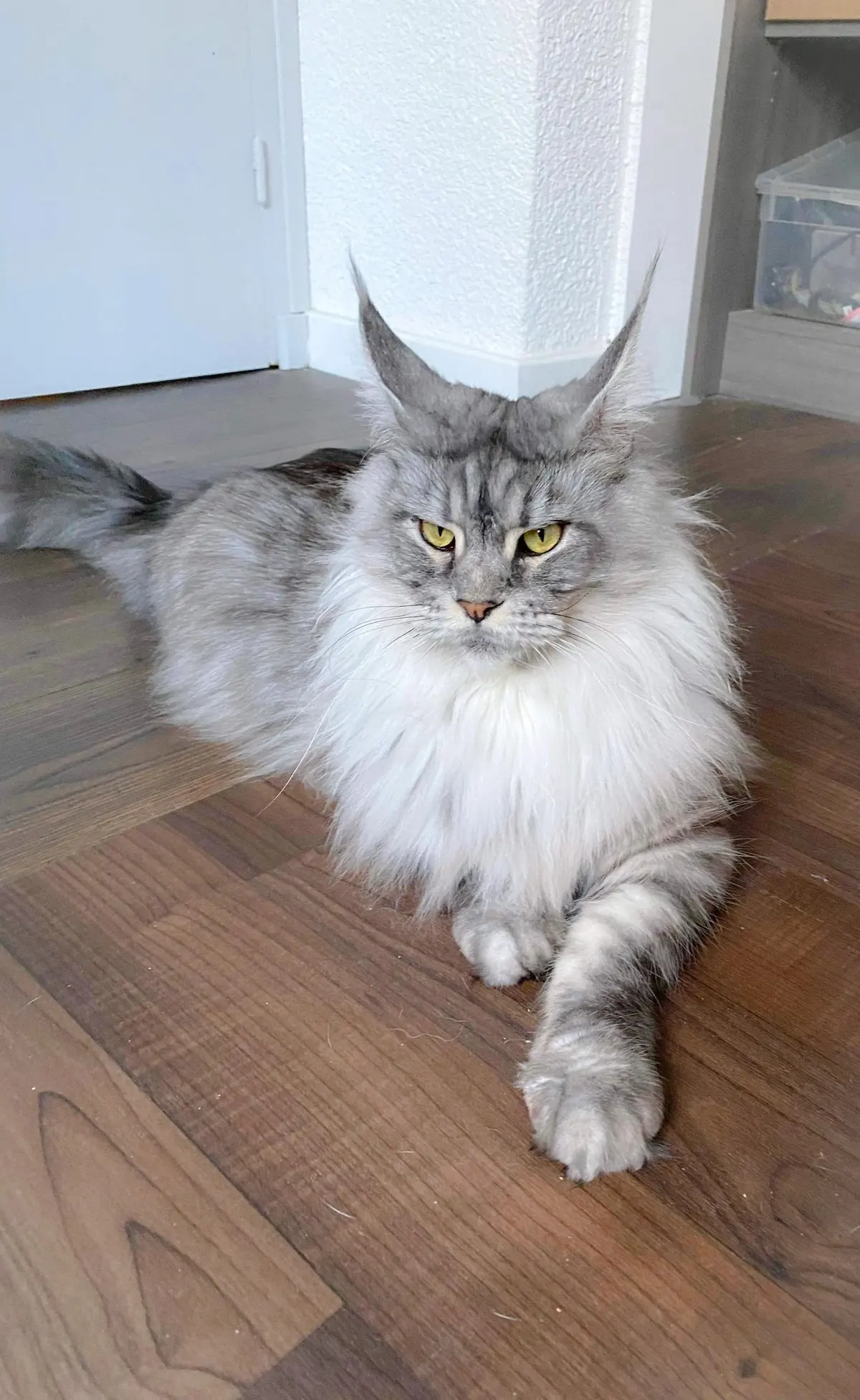
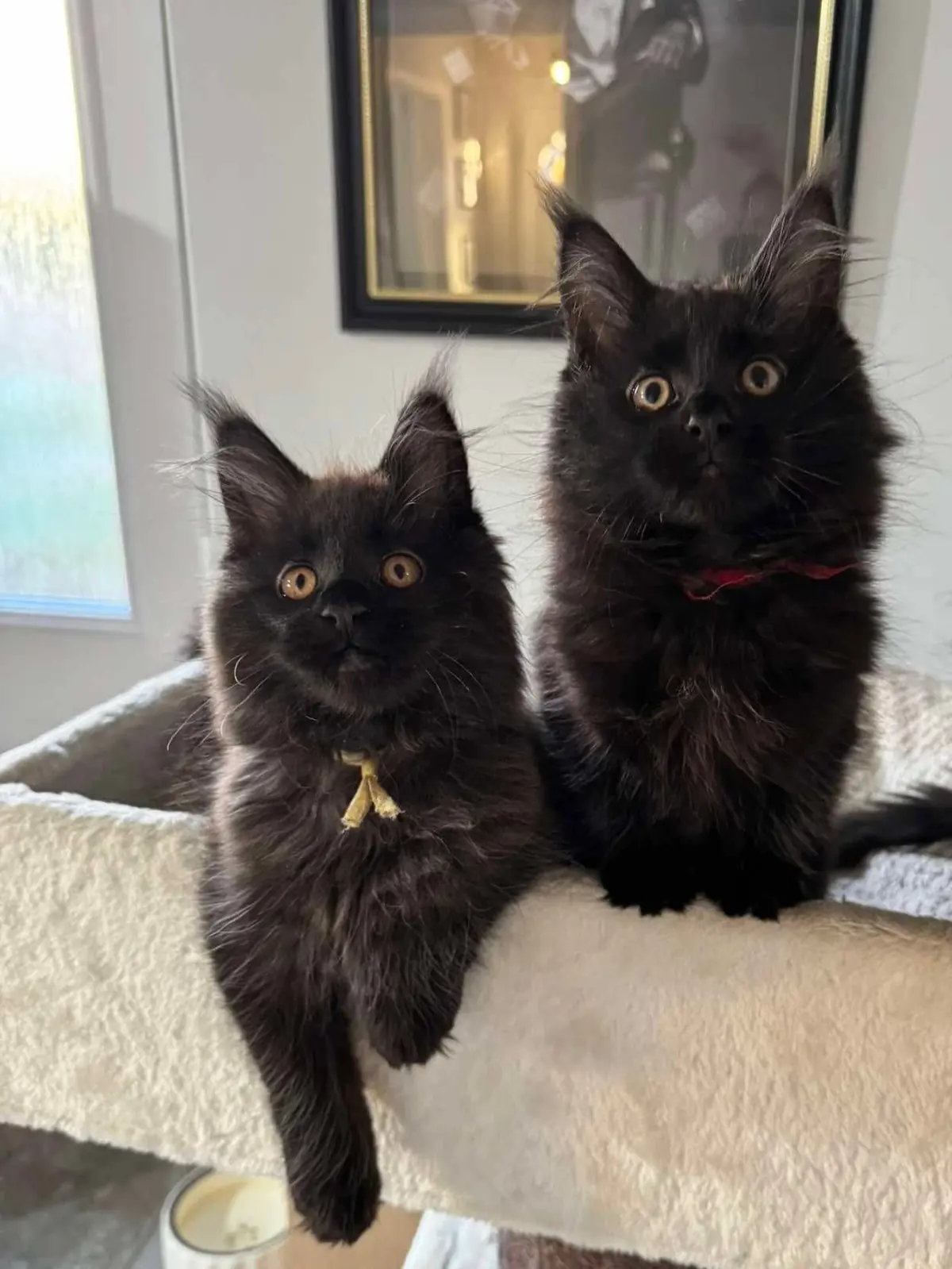
A solid black Maine Coon is black from the root to the tip of every hair (CFA standard). A black smoke looks black when it sits still, but each hair has a white base, so the coat flashes silver-white when the cat moves, with a paler ruff and ear tufts (FIFe).
The two are hard to tell apart in a kitten. A smoke kitten can look solid black at first, its pale undercoat shows from a few weeks old, and the coat can look mottled at 6 to 8 weeks (CFA Hints). The full smoke contrast can take until about two years (CFA). Silver is dominant, so a kitten can only be a smoke if one of its parents is silver or smoke.
Black kittens can also look rusty or show stray silver hairs until their adult coat comes in at 12 to 18 months (CFA Hints). Our black Maine Coon guide shows solid black, smoke and black tabby side by side.
Red (orange or ginger) and cream
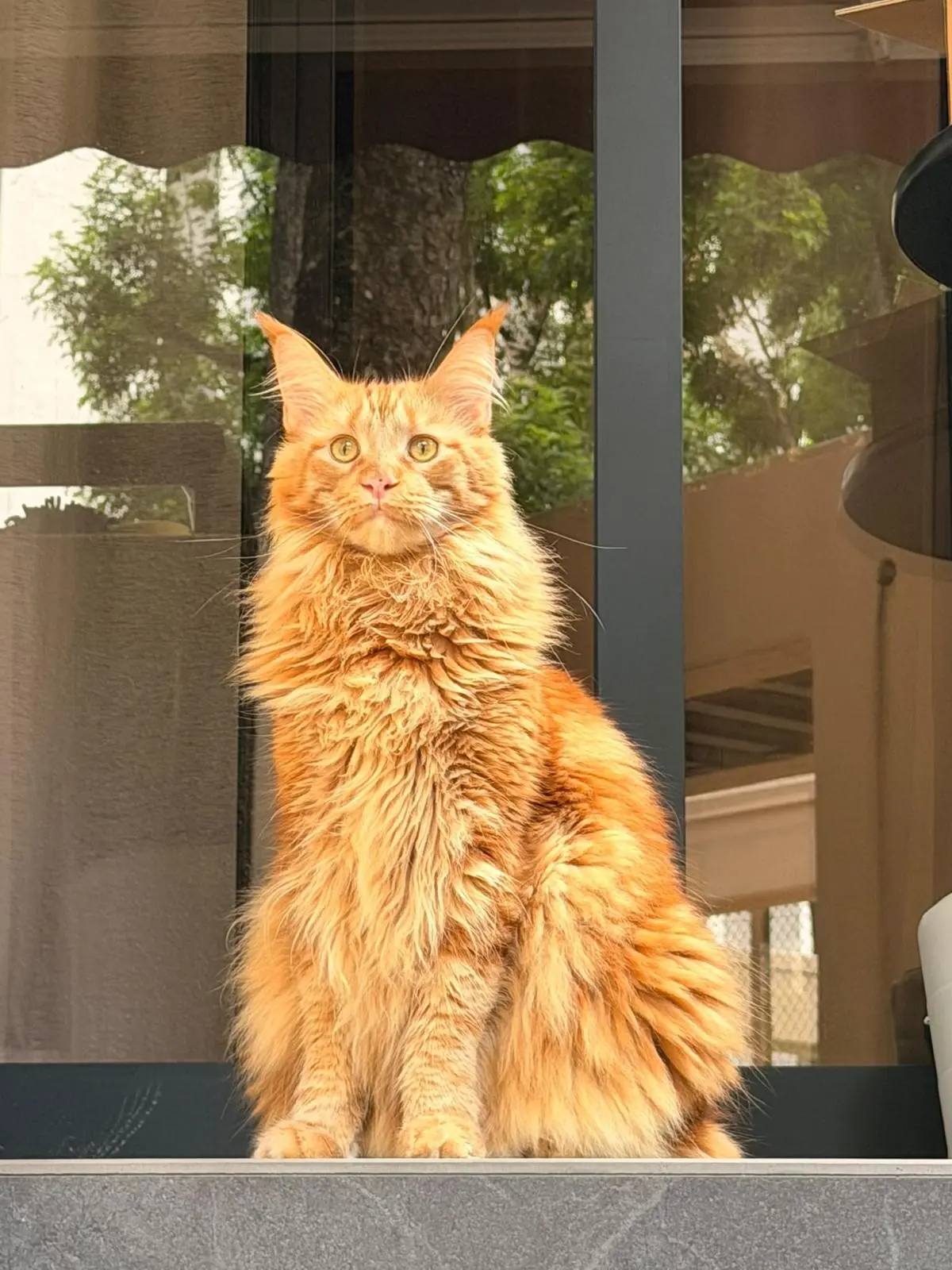
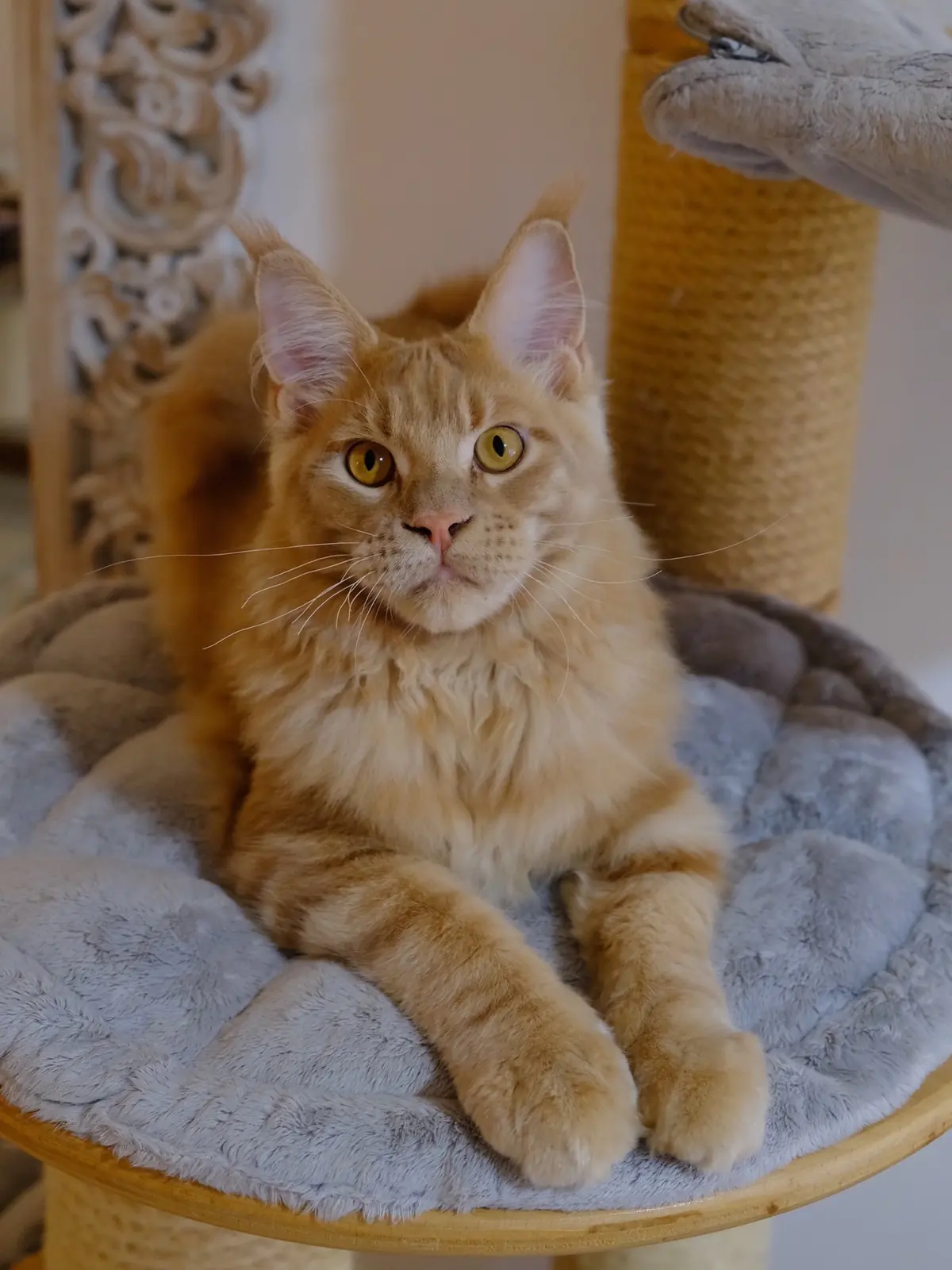
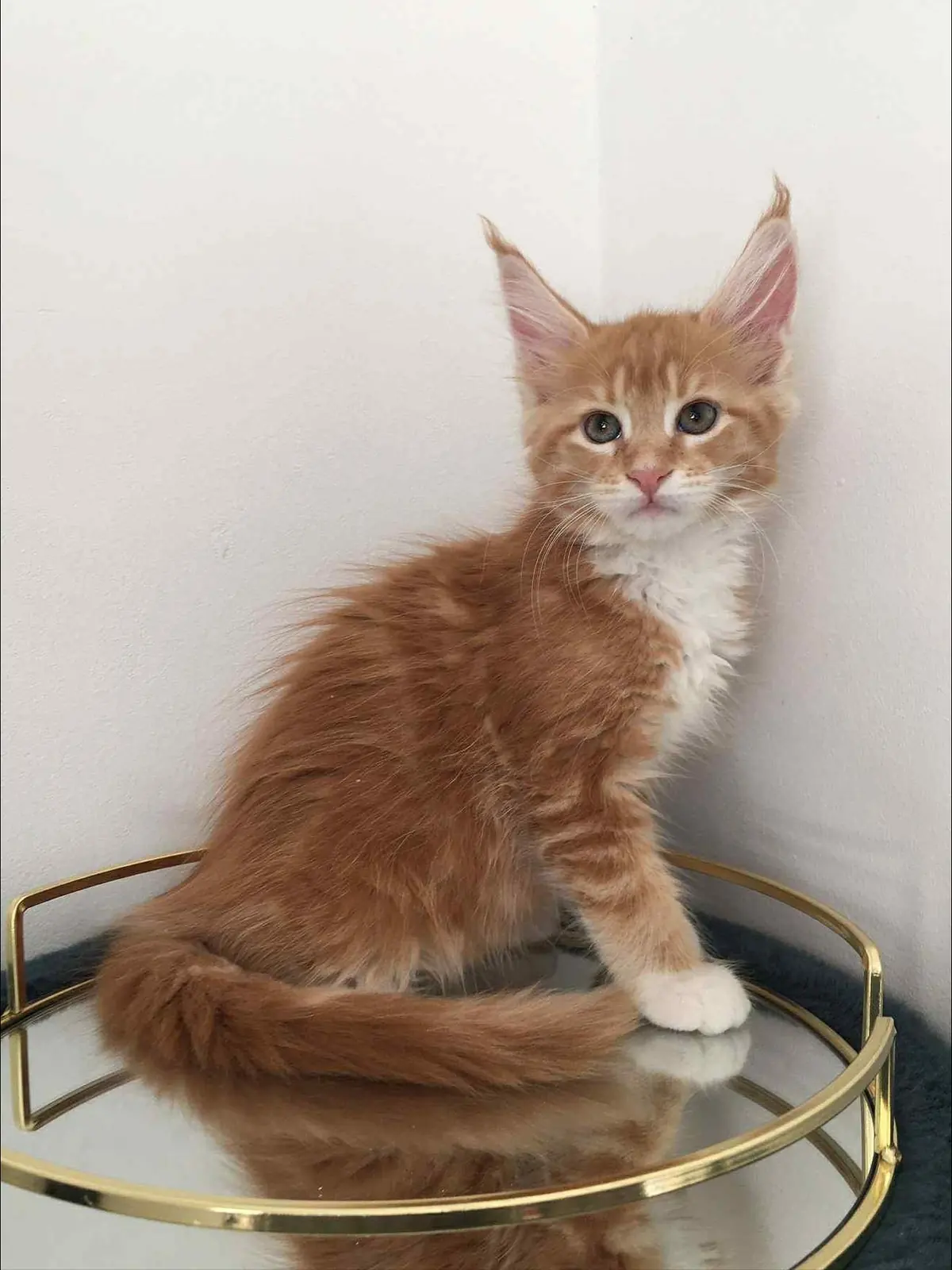
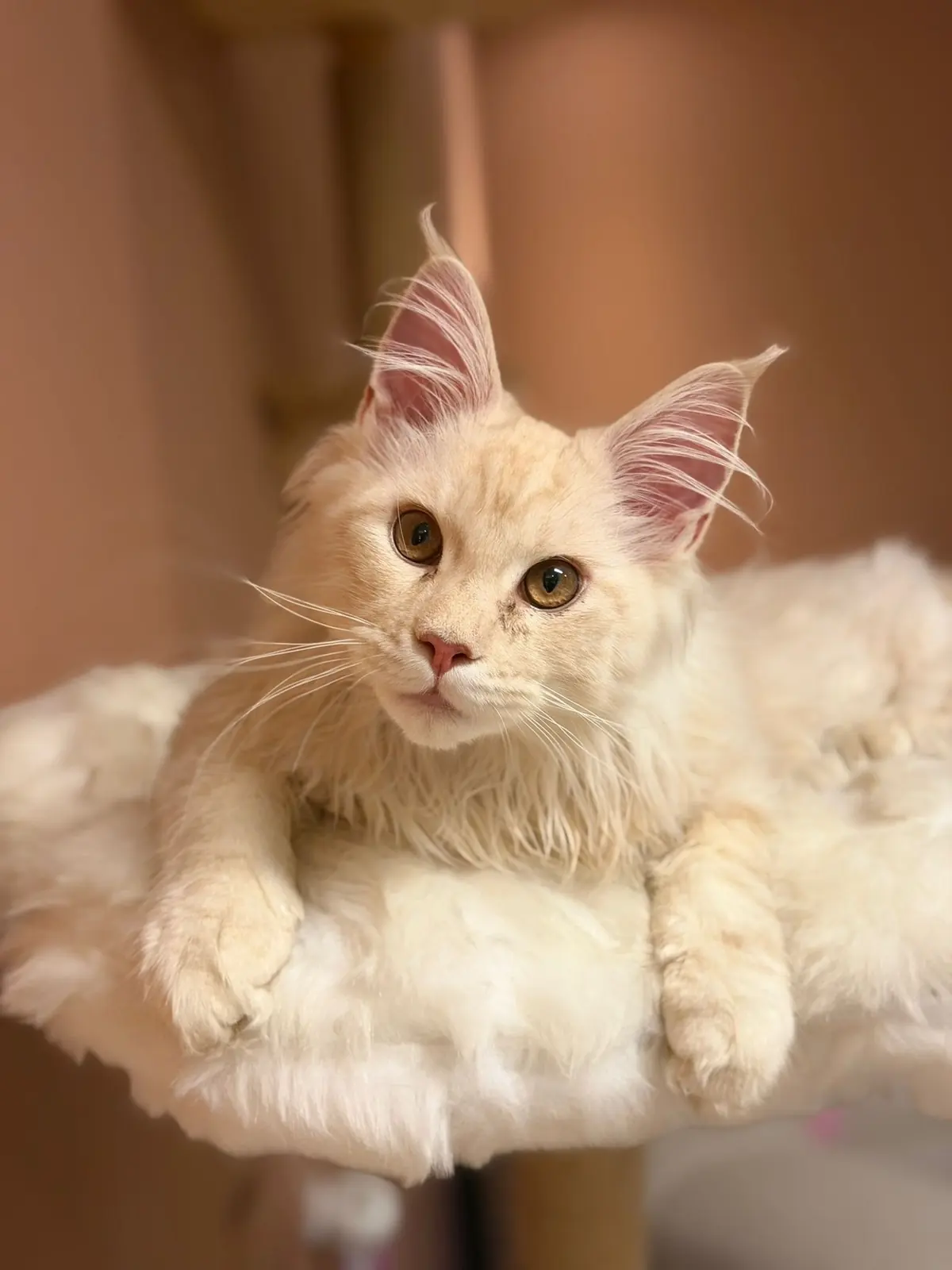
"Orange", "ginger" and "marmalade" are everyday words. Breed registries call the colour red, and its softer, diluted version cream (GCCF).
A red Maine Coon nearly always shows tabby marks, even when it is registered as a solid red, because the orange gene works around the switch that normally hides the stripes (Kaelin et al. 2025). A cream kitten's faint marks usually fade by about nine months (CFA Hints).
Most orange cats are boys, because the orange gene is on the X chromosome: a male has one X, so one copy makes him red, while a female needs two (Science News). The often-quoted "80% of ginger cats are male" is a rule of thumb, not a fixed number. In a pedigree litter the parents decide: a red father and a red mother have only red kittens, girls as well as boys. There is more on reds, creams and torties in our orange Maine Coon guide.
Blue (grey)
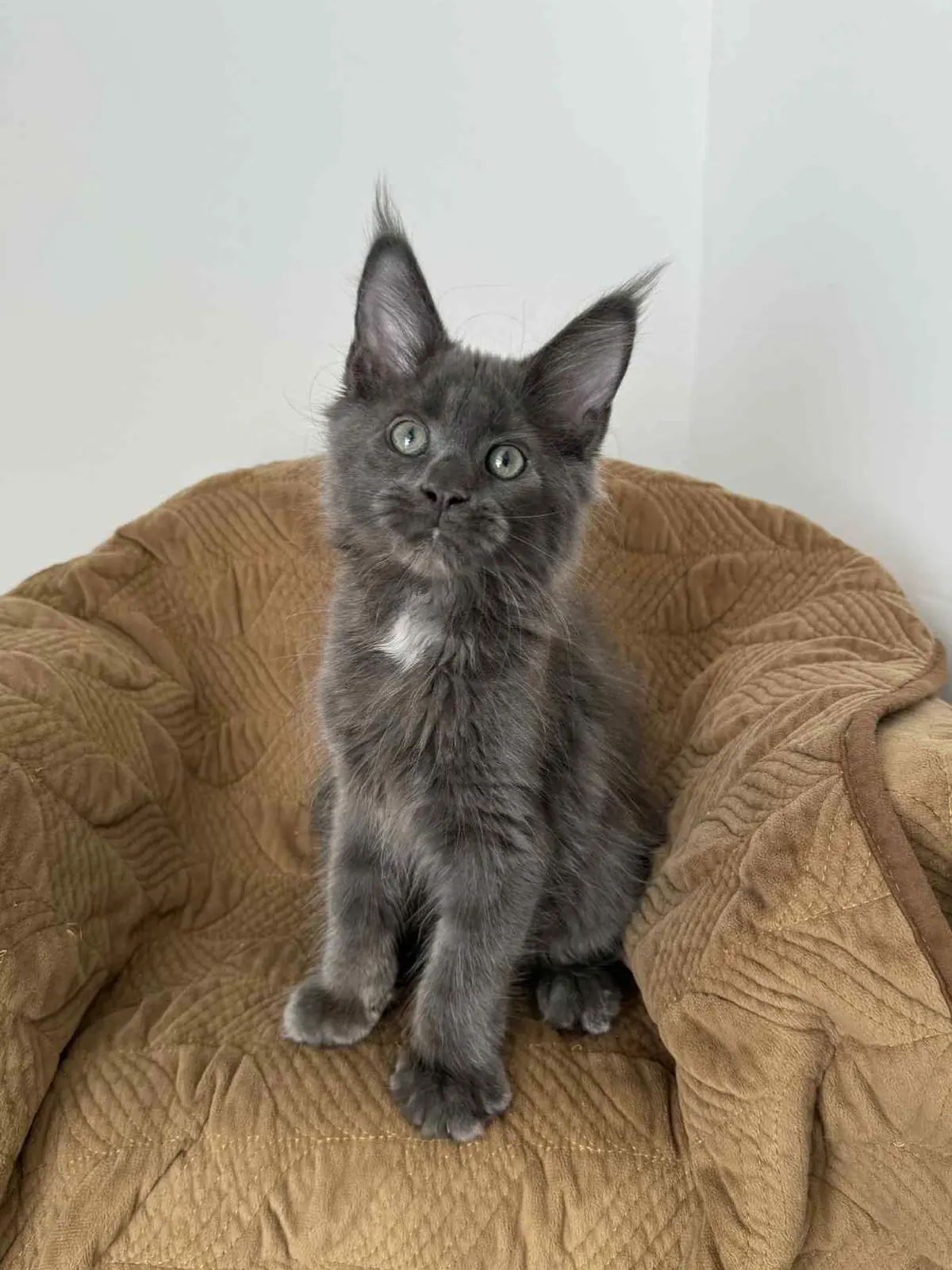
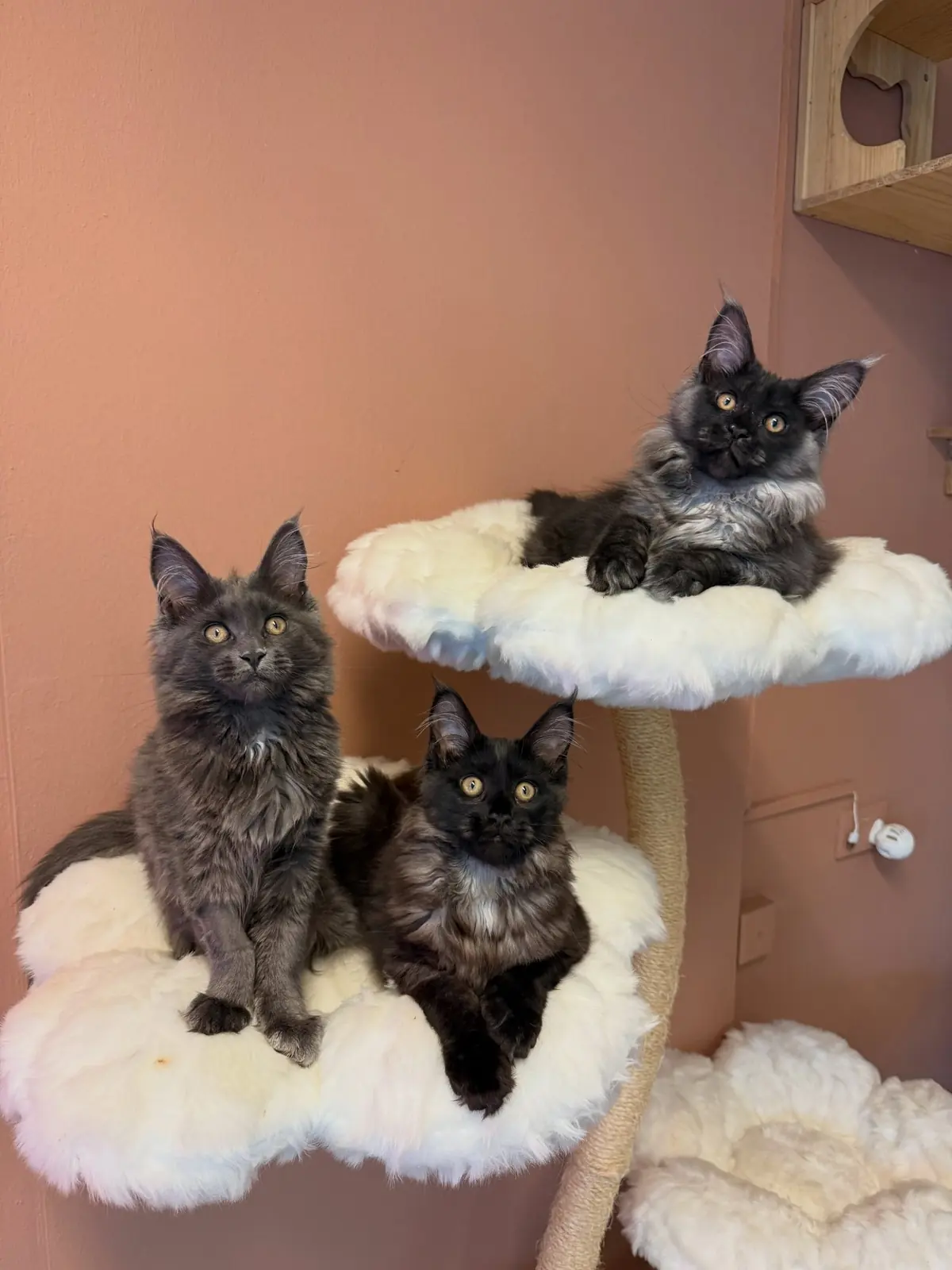
A grey Maine Coon is called blue by breeders and registries. It is a diluted black: the same pigment, clumped so it looks soft blue-grey (GCCF). Blue also comes as blue tabby, blue smoke and blue silver, just as black does.
Silver, smoke, shaded and shell
The silver gene takes the warm colour out of the base of each hair. How far down the dark colour reaches gives the coat its name: in a shell only the very tip is coloured, in a shaded roughly a quarter to a third of the hair, and in a smoke most of it, leaving only a white root (CFA Hints, FIFe). The registries give slightly different fractions, so treat them as ranges.
A silver tabby has black stripes on a silver-white ground, one of the best-known Maine Coon looks. FIFe also recognises golden, a shaded coat on a warm base that the other registries don't list (FIFe).
Tabby patterns: classic, mackerel, ticked and spotted
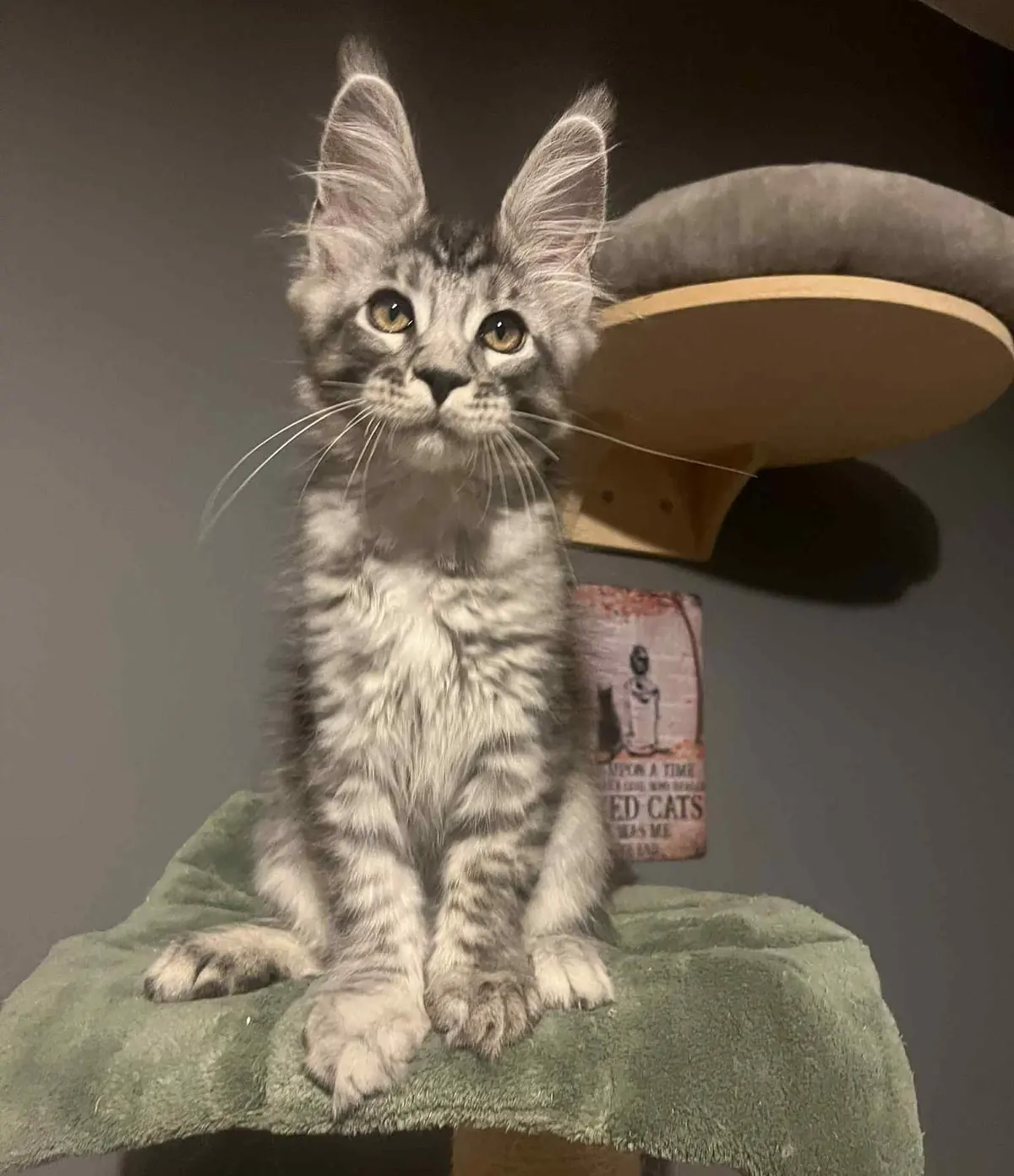
Two genes set the pattern: one turns mackerel into classic, and another gives ticked, which hides both (Kaelin et al. 2021). Classic and mackerel are the patterns you will see most in Maine Coons; not every registry accepts ticked and spotted (see the table below).
White and bicolour
A solid white Maine Coon carries a dominant white gene that stops colour reaching the coat. The cat still carries its "real" colour and can pass it on to its kittens (David et al. 2014), and white kittens often show a small coloured smudge on the head that fades by about nine months (CFA Hints).
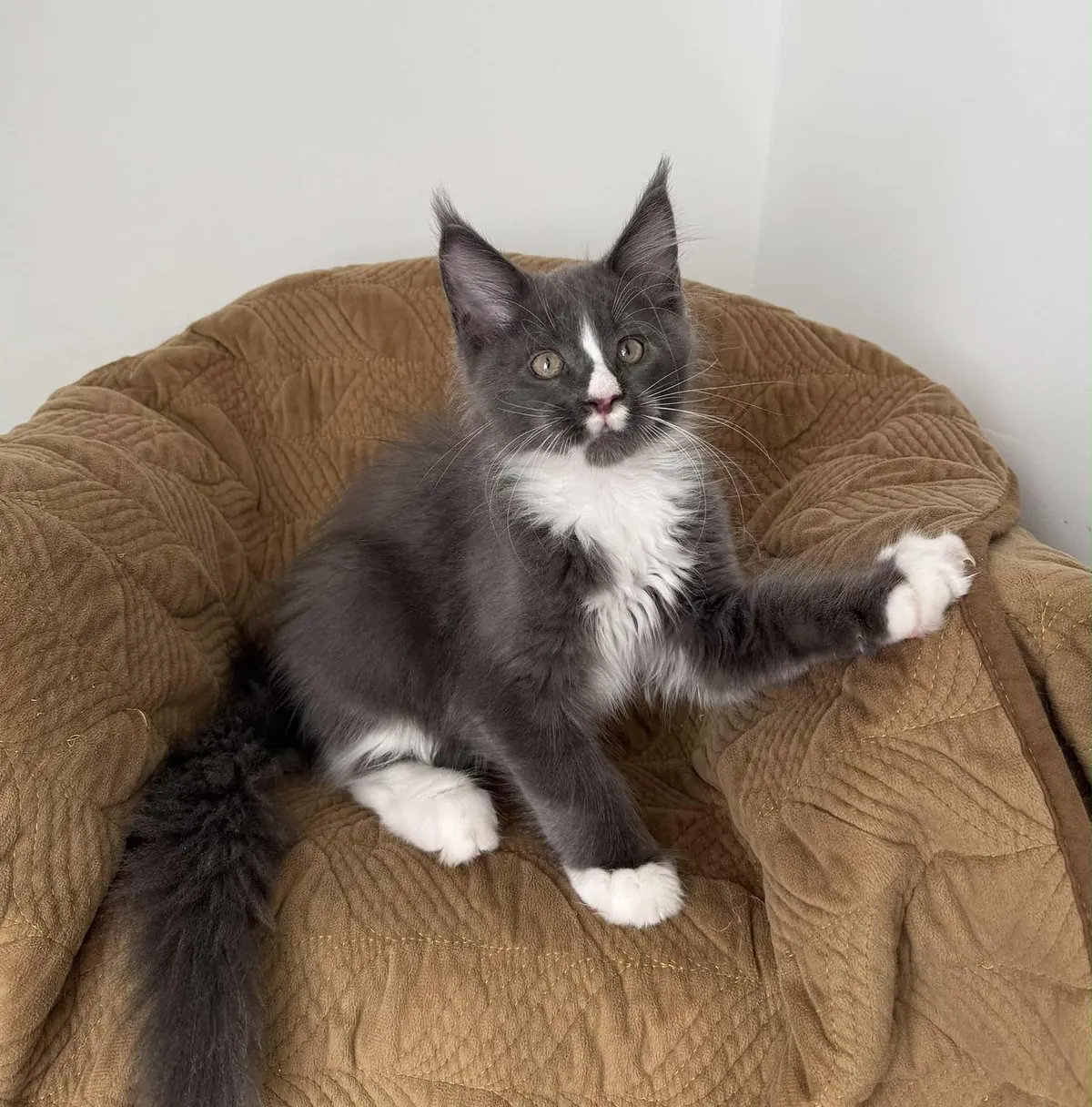
White patches come from a different gene, white spotting. A bicolour is about a third to a half white, a harlequin about half to two thirds, and a van is mostly white, with colour on the head and tail (PawPeds). "Mitted" (white paws only) is not a Maine Coon class (FIFe). A long white coat shows every mark, so it needs regular grooming.
Tortie and calico: almost always female
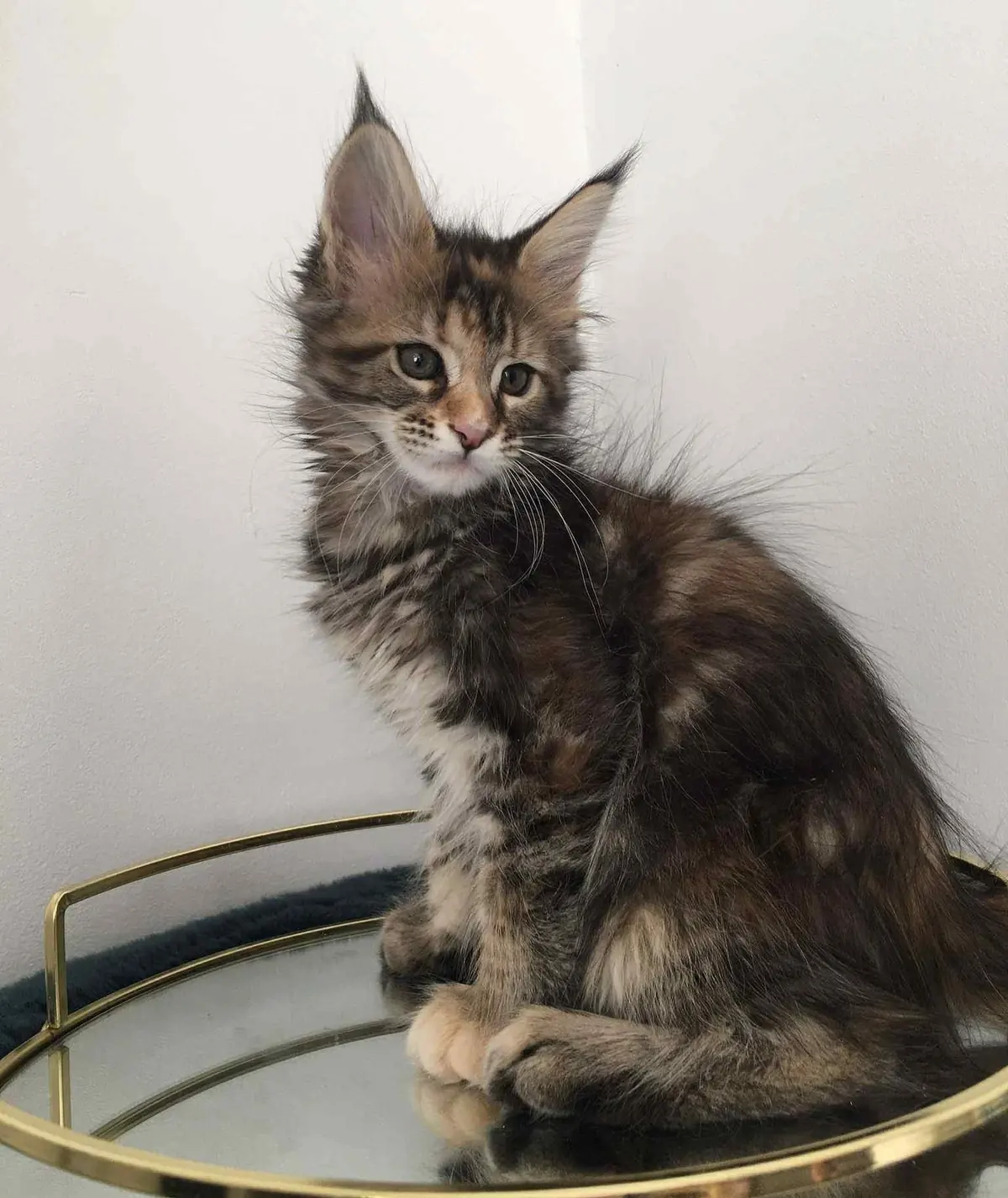
A tortoiseshell, or tortie, has patches of black and red, or of blue and cream. With white patches too, it is a calico, which registries call tortie and white. Because the orange gene is on the X chromosome, a cat needs two X chromosomes, one with orange and one without, to show both colours, so torties are almost always female (Science News). Male torties exist, but they are rare, usually carry an extra X chromosome and are usually sterile (Foster 2022).
Eye colours
Maine Coons can have green, gold, green-gold or copper eyes with any coat colour (CFA). Blue or odd eyes (one blue, one gold or green) come only with the white genes, or with a rare blue-eye gene called PAX3 "DBE". That gene has been linked to deafness: all eight DBE cats tested in one study had reduced or no hearing (Rudd Garces et al. 2024). FIFe's rules from 1 July 2026 require a PAX3 test for every blue- or odd-eyed Maine Coon unless both parents are proven free (FIFe rules).
Every kitten is born with blue eyes, and the adult colour comes in over the first few months, so don't choose a kitten on eye colour alone.
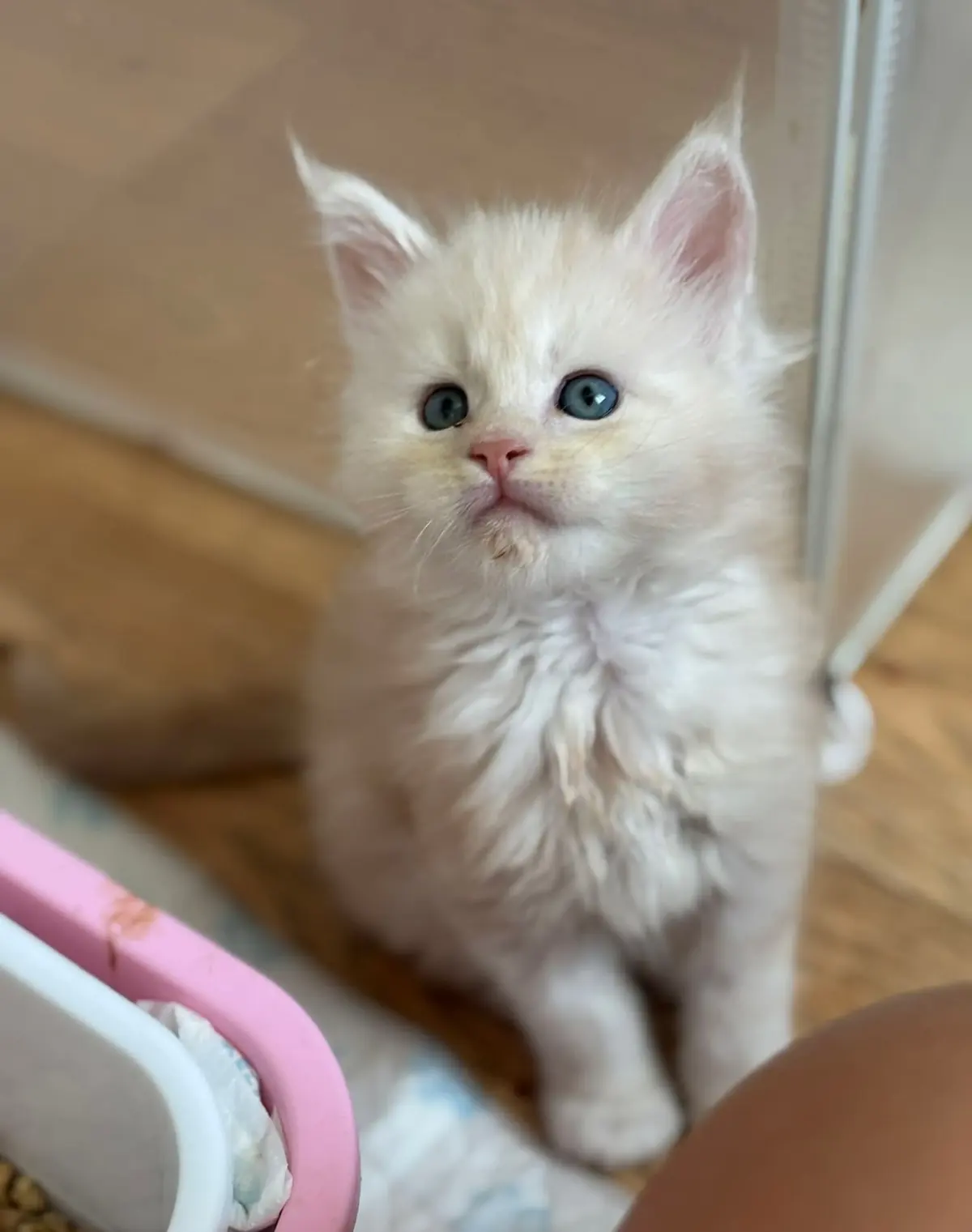
How kitten colours change
A kitten's coat at 12 weeks, the youngest a Singapore pet shop may sell a kitten (AVS), is only a preview. Some colours keep changing for years:
Sources: CFA Hints, CFA, CFA breed profile, GCCF, TICA.
The best preview of a kitten's adult coat is its parents, the colour code on its pedigree and, for silver, a DNA test. It is the same with size: a Maine Coon keeps growing for years, as our size and growth guide explains.
Colours you won't see in a pedigree Maine Coon
Every registry we checked excludes chocolate, lilac, cinnamon, fawn and the pointed (Siamese-style) pattern. That goes back to the breed's roots as a natural farm cat from New England; it isn't about health (GCCF). A "Maine Coon" in one of these colours is a sign of a cross with another breed, not a rare colour. The pointed pattern is one of the clearest differences from a Ragdoll (see Maine Coon vs Ragdoll).
Which colours each registry accepts
Our kittens come from partner catteries in Europe, and their pedigrees are issued by WCF, TICA or CFA, depending on the cattery. The registries' rules differ more than most guides say, as our European Maine Coon guide also explains:
| Colour or marking | FIFe | WCF | GCCF | CFA | TICA |
|---|---|---|---|---|---|
| Ticked tabby | Yes | Yes | Registered, not shown | Yes | Yes |
| Spotted tabby | Yes | Yes | Registered, not shown | Not listed | Yes |
| Golden | Yes | Not excluded | Not named | No class | Not addressed |
| Van | Yes | Yes | Registered, not shown | Yes | Not stated |
| Small white locket | Allowed | Allowed | Awards withheld | Disqualified | Penalised |
| Blue or odd eyes | White, van, harlequin | White; odd eyes also with white patches | Pure white only | White and with-white | White and with-white |
Sources: FIFe, WCF, GCCF, CFA, TICA.
So a European kitten that is ticked, spotted, golden or has a small white locket can be fully correct under FIFe or WCF rules, even if a CFA or GCCF guide calls it a fault. A small white locket is a good example: WCF allows it, CFA disqualifies it, so it matters which registry issued your kitten's papers.
How to read the colour code on a pedigree
European pedigrees write the colour as an EMS code. CFA uses words instead, and calls "brown tabby" what EMS calls black tabby (PawPeds). Here is one code, decoded:
MCOMaine Coon
nblack
ssilver
22classic tabby
09with white
Ask to see the code on your kitten's pedigree. It is the one place where the colour is written down by the registry, not guessed from a photo.
Does colour change personality or health?
- Personality: no proven link. The studies behind colour-personality claims are owner surveys and perception studies (Stelow et al. 2016), and the scientists who found the orange gene said it doesn't set a cat's personality (Kyushu University).
- Health: only a few links: deafness in some white cats, sunburn and skin cancer on white or pale skin (PDSA), the PAX3 blue-eye gene, and the rare, usually sterile male tortie.
Our kittens' colours
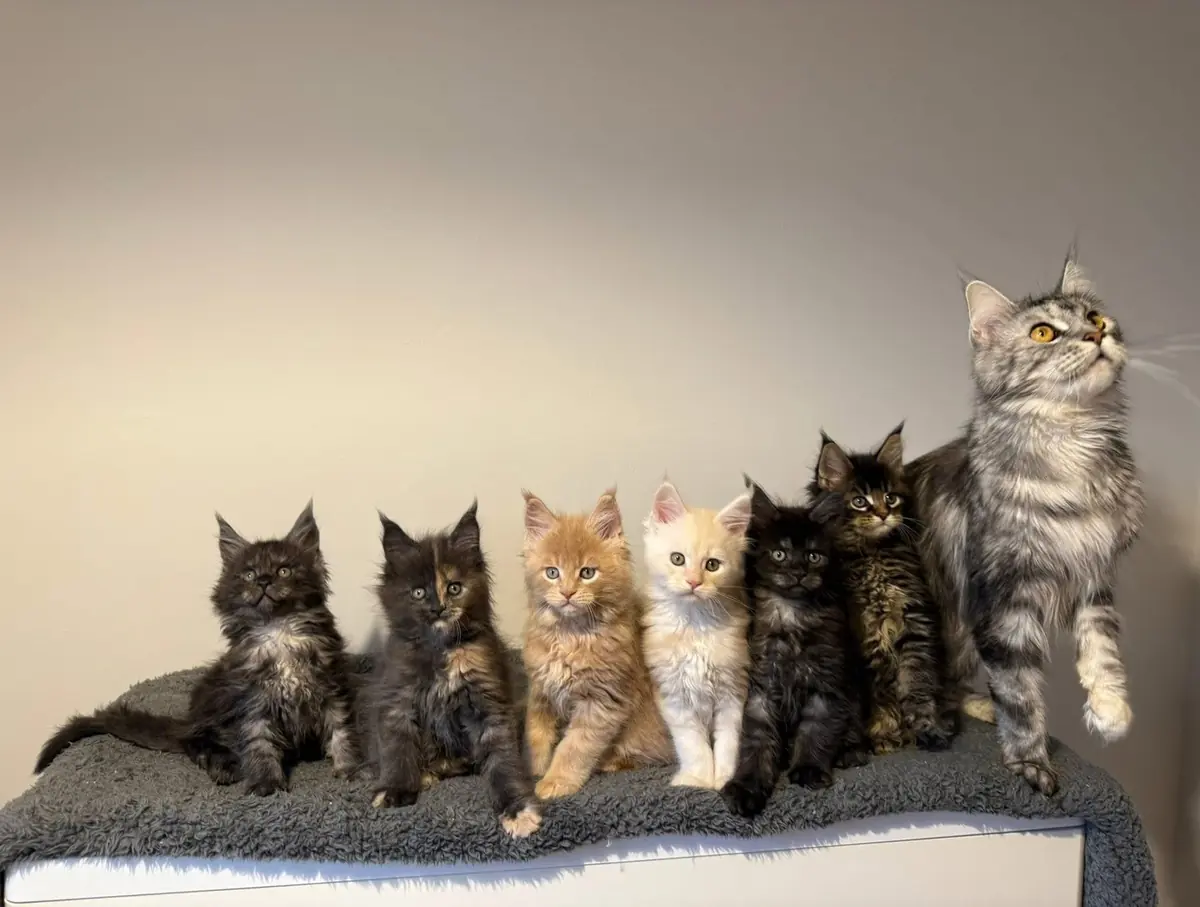
Our litters come in a mix of colours, and each one is different. To see who is available now, visit our available Maine Coon kittens page or follow us on Instagram @mainecoon.sg, where we post new kittens first. You can also book a private viewing to meet them at our cattery in Joo Chiat. Have a question about a colour? WhatsApp us and we will send you photos of the parents.
Questions about Maine Coon colours
What is the rarest Maine Coon colour?
No registry publishes colour statistics, so nobody can say for sure, and claims about a "rarest" colour are guesses. Some colours are simply recognised by fewer registries: golden, for example, is listed only by FIFe.
How can I tell a black smoke kitten from a solid black?
Part the fur on the neck or flank: a smoke has white roots, a solid black is black right down to the skin. The parents help too, because a smoke kitten needs at least one silver or smoke parent. A smoke coat can take about two years to show its full contrast.
Why are most orange Maine Coons male?
The orange gene sits on the X chromosome. A male has one X, so one copy makes him red. A female has two, needs the gene on both to be red, and with one copy she is a tortie.
Are white Maine Coons deaf?
Not all of them. Some white cats are born deaf in one or both ears. In three modern hearing-test studies, 17 of 59 white Maine Coons were deaf in at least one ear, about 29%, from small samples. A BAER hearing test checks each ear, and every white kitten from our cattery is hearing-tested before it flies to Singapore.
Do Maine Coon kittens change colour as they grow?
Many do. Smoke and shaded kittens can take months or years to show their adult coat, black kittens can look rusty until their adult coat comes in at 12 to 18 months, and every kitten starts with blue eyes.
See who is available now, or visit our cattery in Joo Chiat by appointment.