Facts on this page come from the registries' breed pages and standards, published veterinary studies and Singapore's official sources, checked in November 2026. Each one links to its source.
Maine Coon vs Ragdoll at a glance
| Trait | Maine Coon | Ragdoll |
|---|---|---|
| Size and weight | Males can reach 9 kg (20 lb) or more; females are smaller | The same CFA wording; females can be much smaller |
| Coat and grooming | Heavy, shaggy and water-repellent. Comb 2–3 times a week | Silky, little undercoat. Comb once or twice a week |
| Colours and eyes | Almost any colour, never pointed. Green, gold or copper eyes; blue only with white | Always pointed. Always blue eyes |
| Activity | Easy-going yet active; wants to interact when you're home | Moderately active; among the least active breeds in owner surveys |
| Time to full size | 3 to 5 years | About 4 years |
| Lifespan | No clear winner: 9.7 years from birth in UK records; 74% reached 10 in Sweden | 10.3 years from birth in UK records; 63% reached 10 in Sweden |
| Health tests to ask for | HCM (A31P) and SMA DNA tests, hip X-rays, heart scans | HCM (R818W) DNA test, heart scans |
| HDB fit | Fits, with daily play and a tall, sturdy cat tree | Fits easily; CFA says it needs little space |
Sources: CFA Maine Coon, CFA Ragdoll, GCCF Ragdoll and the studies cited below.
Size is closer than you think
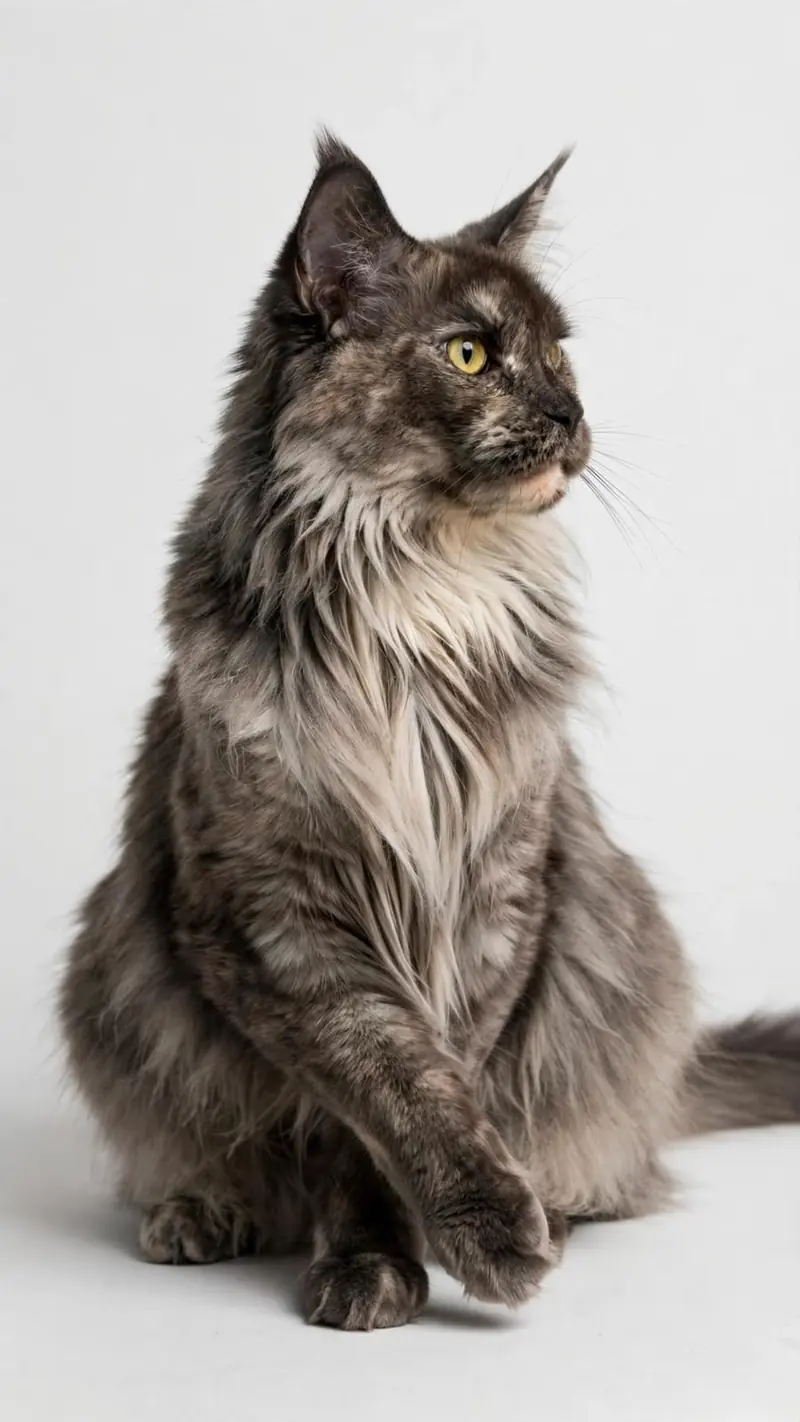
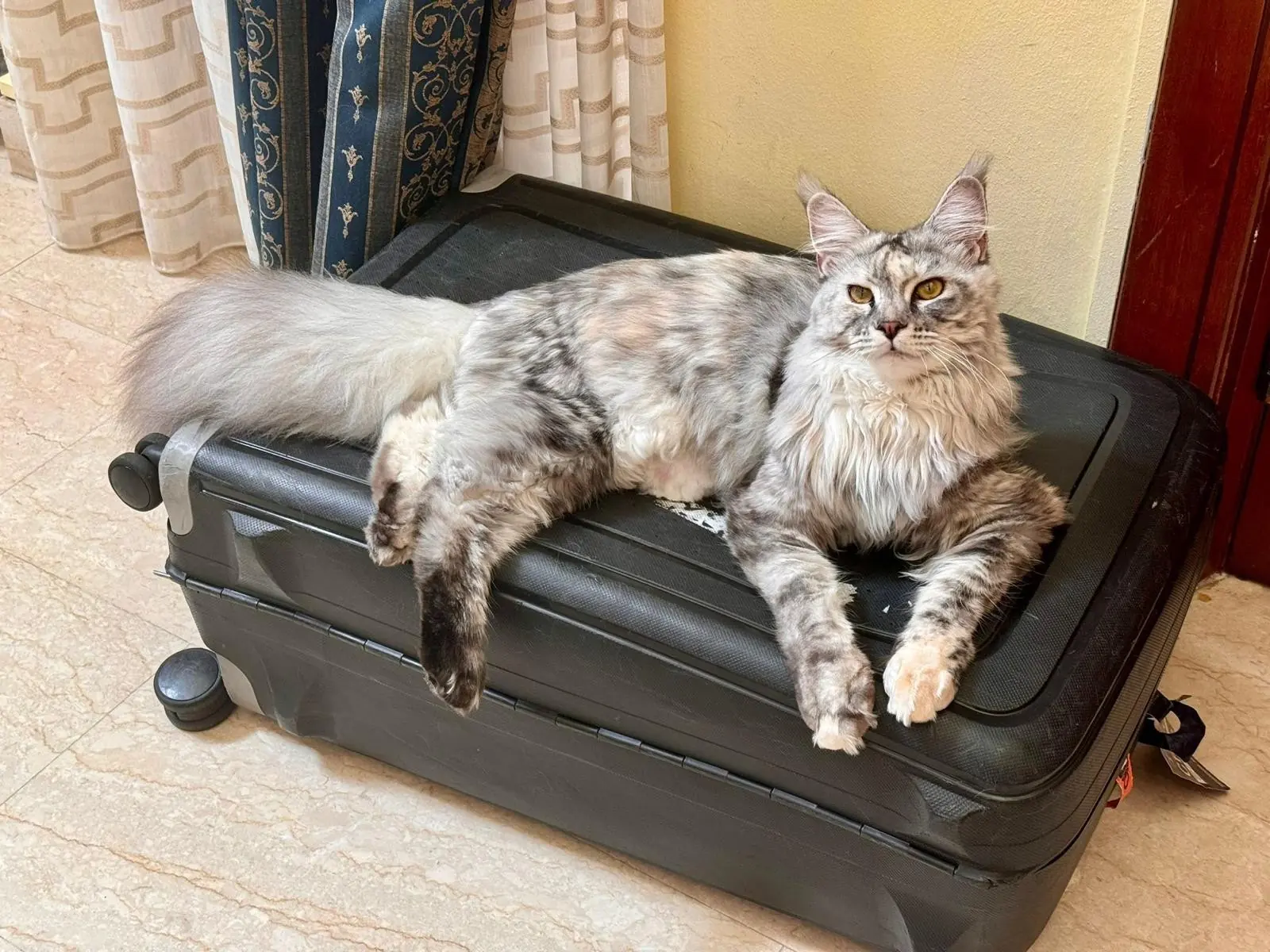
CFA calls the Maine Coon cat the largest pedigreed breed and the Ragdoll one of the larger ones. Yet it uses the same sentence for the males of both: reaching or passing 20 lb, about 9 kg, is not unusual, and females are smaller. On paper, the two are about the same size. The build differs in the details: a Maine Coon has large tufted ears and big, round, tufted paws, while a Ragdoll is heavy-boned, and its standard allows a moderate belly pad (CFA Maine Coon, CFA Ragdoll). The ruff and shaggy coat add to the Maine Coon's look of size.
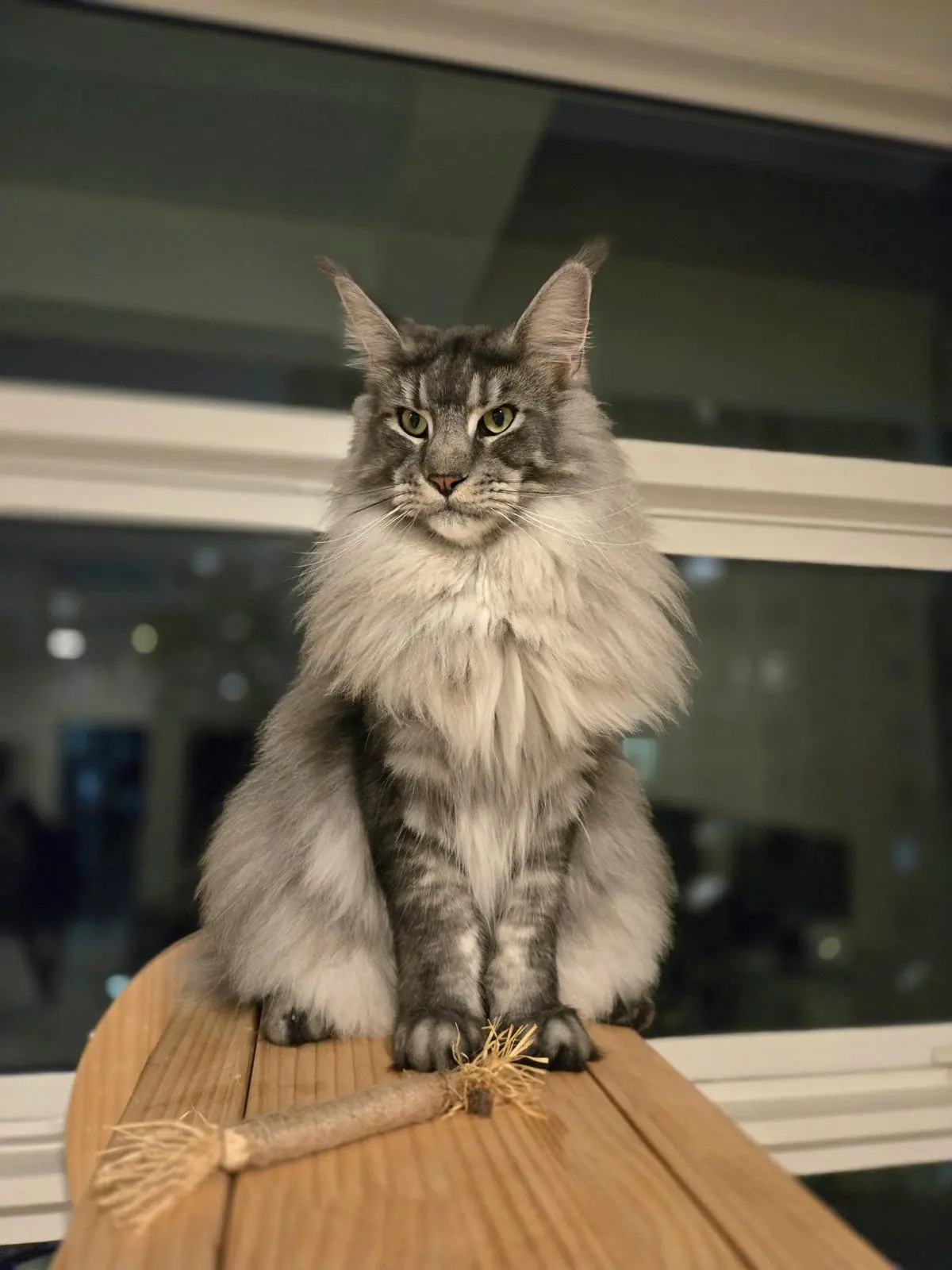
Both breeds grow slowly. CFA says a Maine Coon can take up to three years to reach full growth, GCCF says four and TICA four to five. A Ragdoll takes about four (CFA, GCCF, TICA, CFA Ragdoll). So a kitten at 12 weeks, the youngest a Singapore pet shop may sell one (AVS), shows little of its adult size. Its parents are the best guide. Our size and growth guide explains how a Maine Coon fills out.
Coat in Singapore's humidity
In Singapore, the coat is the biggest day-to-day difference. A Maine Coon's heavy, shaggy coat was built for New England winters (CFA) and repels water (CFA Cat Talk). CFA suggests combing it two or three times a week. A Ragdoll's coat is mostly guard hairs with little undercoat, which cuts shedding and matting, so once or twice a week is usually enough (CFA Ragdoll). GCCF adds that it still mats if neglected (GCCF).
Singapore's daily mean temperature runs from 26.8 °C to 28.6 °C, with humidity around 82% (MSS). Cats with long or thick coats are more prone to heatstroke, and so are overweight cats (Animal Trust). That matters for Ragdolls too, as they love their food and can put on weight (CFA Ragdoll).
Colours and eyes
Colour is the quickest way to tell them apart. Every Ragdoll is colourpointed: its body is lighter than its head, legs and tail. The pointing comes from the same gene variant as the Siamese's (CFA Ragdoll, Anderson et al. 2022). Ragdolls come as colourpoint, mitted or bicolour, with seal, blue, chocolate, lilac, red, cream, tortie or tabby points (GCCF). Their eyes are always blue.
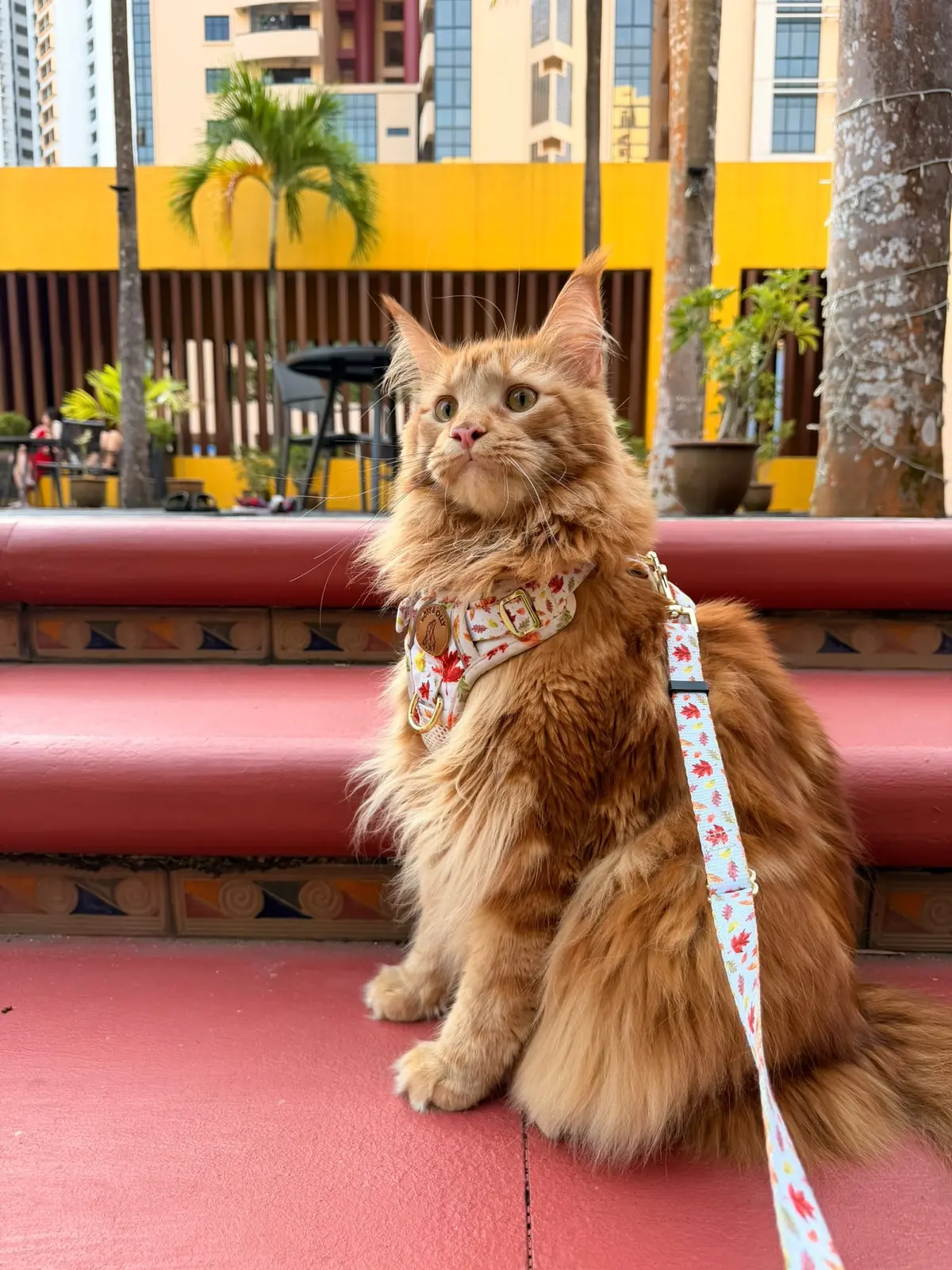
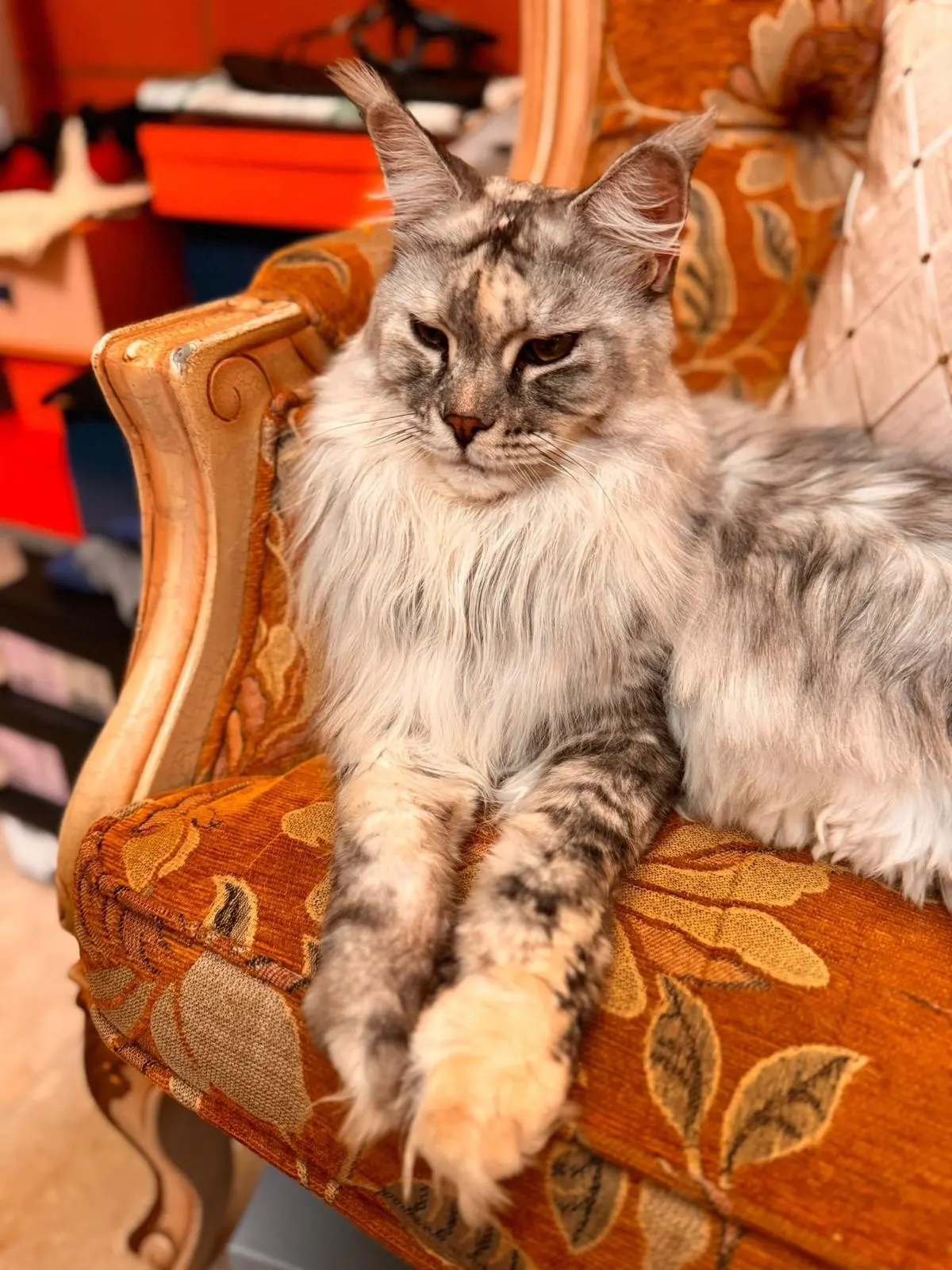
A Maine Coon can be almost any colour, but no major registry accepts pointed patterns, chocolate, lilac, cinnamon or fawn (World Cat Congress). Its eyes are green, gold, green-gold or copper, and blue or odd only in white cats and cats with white (CFA). Our Maine Coon colours guide shows them with photos.
FIFe won't register a pointed kitten as a Maine Coon (FIFe rules), so a pointed, blue-eyed kitten sold as one suggests a cross.
Personality: claims vs studies
CFA calls the Maine Coon gentle, easy-going yet active, and keen to interact when you are free. It calls the Ragdoll docile, placid and affectionate, and playful without insisting on play (CFA Maine Coon, CFA Ragdoll). These are the registries' words, and so is the gentle giant nickname.
The limp myth. The breed's founder claimed her foundation cat went limp when held. CFA says this isn't typical of today's Ragdolls, and GCCF calls it "pure hype": Ragdolls have the same physical responses and pain threshold as other breeds (CFA Ragdoll, GCCF).
What the studies found. Two large Finnish owner surveys, of 5,726 cats and of more than 4,300, placed the Ragdoll among the least active breeds (Salonen et al. 2019, Mikkola et al. 2021). In the second, Maine Coons scored relatively high for touch sensitivity or aggression towards their owners, as in earlier studies. So the calm label fits the Ragdoll best. A Maine Coon is better pictured as playful, people-oriented and interactive, and not every one wants to be held. Every cat is different, as our page on whether Maine Coons are cuddly says.
Health tests to ask for
Heart. HCM (hypertrophic cardiomyopathy) is a heart disease. Each breed has one HCM gene variant that a 2024 study rated as disease-causing: A31P in Maine Coons and R818W in Ragdolls, also listed as R820W (Boeykens et al. 2024). Most of the risk is in cats with two copies. In one study of 282 Maine Coons, 80% of the 25 with two copies developed HCM (Granström et al. 2015). In a UK survey, the 12 Ragdolls with two copies had a median survival of 5.65 years (Borgeat et al. 2014).
Both variants have become much rarer since testing began, probably because of the tests, say the 2022 study's authors (Anderson et al. 2022):
The groups differ, so read this as a trend. Sources: Fries et al. 2008, Mary et al. 2010, Borgeat et al. 2014, Anderson et al. 2022.
Hips. Hip dysplasia is the Maine Coon's other big issue. It showed up in 24.9% of 2,548 Maine Coons in the US OFA registry and in 37.4% of 5,038 in a Swedish programme that scores hips differently (Loder & Todhunter 2018, Low et al. 2019). Ask for the parents' hip X-ray results. We found no comparable figures for Ragdolls.
Other tests. Maine Coons can also be tested for SMA, a rare inherited disease that weakens the muscles (Wisdom Panel). The PKD1 kidney-cyst variant is now rare in both breeds: 0.3% of Maine Coons and 0.09% of Ragdolls carried it in 2022 (Anderson et al. 2022).
Ragdoll kidneys. In UK referral records, the odds of kidney or ureter stones were 3.31 times higher in Ragdolls than in non-pedigree cats, while Maine Coons had no raised risk (Geddes et al. 2023). In Swedish insurance data, Ragdolls had the highest death rate from upper urinary disease of any breed (Egenvall et al. 2009). The claim that Ragdolls are prone to FIP rests on 13 Ragdolls in one hospital study, so treat it as weak (Pesteanu-Somogyi et al. 2006).
When a seller talks about health:
A promise of health tests, with no papers
Results for both parents that you can read and keep
A negative DNA test offered as proof of a healthy heart
DNA results plus recent heart scans
A kitten sold on how big it will get
Hip X-ray results for Maine Coon parents
Lifespan
There is no clear winner. UK vet records give a life expectancy at birth of 9.71 years for Maine Coons and 10.31 for Ragdolls, and the margins of error overlap (Teng et al. 2024). In Swedish insurance data, 74% of Maine Coons lived to 10, against 63% of Ragdolls, and 54% of the Maine Coons reached 12.5 years (Egenvall et al. 2009).
Life expectancy at birth includes kittens that die young, so a cat that reaches adulthood can expect longer. The UK study linked shorter lives to being unneutered, purebred or at an unhealthy weight, so keep your cat neutered and at a healthy weight. Our Maine Coon lifespan guide covers each life stage.
HDB rules for either breed
An HDB flat may keep up to two cats, plus one dog of an approved breed, and a private home up to three cats and dogs in total. Breaking the limit can bring a fine (AVS).
- Two cats at most. Two of either breed, or one of each, is within the limit. A flat that already has two cats can't add a third.
- Microchip, then licence. Every pet cat must be microchipped, then licensed on AVS's PALS system after a free online course. Keeping an unlicensed cat has been an offence since 1 September 2026 (AVS). Our cat licence guide explains the steps.
- Mesh at home, a harness outside. Owners must take reasonable steps, such as mesh, grilles or screens, to stop cats roaming or falling from height. In public, a cat must be on a harness or in a carrier (AVS). A climbing Maine Coon makes the mesh even more important.
- A cool room. Keep air-con for hot days, and give a Maine Coon a tall, sturdy cat tree. Our Maine Coon HDB guide has more.
Which suits your home?
Use this as a rough guide: every kitten is an individual.
- You want a calm, low-key cat that is happy to lounge near you: a Ragdoll fits the survey picture better.
- You want a cat that plays, follows you and joins in: a Maine Coon.
- You have little time for grooming: a Ragdoll, though it still needs a weekly comb.
- You have children or other pets: CFA says Maine Coons get on well with both, though their size can intimidate at first. Ragdolls are rarely aggressive, but their trusting nature means introductions to other pets need care (CFA Maine Coon, CFA Ragdoll).
- You have a favourite look: pointed with blue eyes means a Ragdoll. Almost any other colour means a Maine Coon.
Meet our Maine Coons
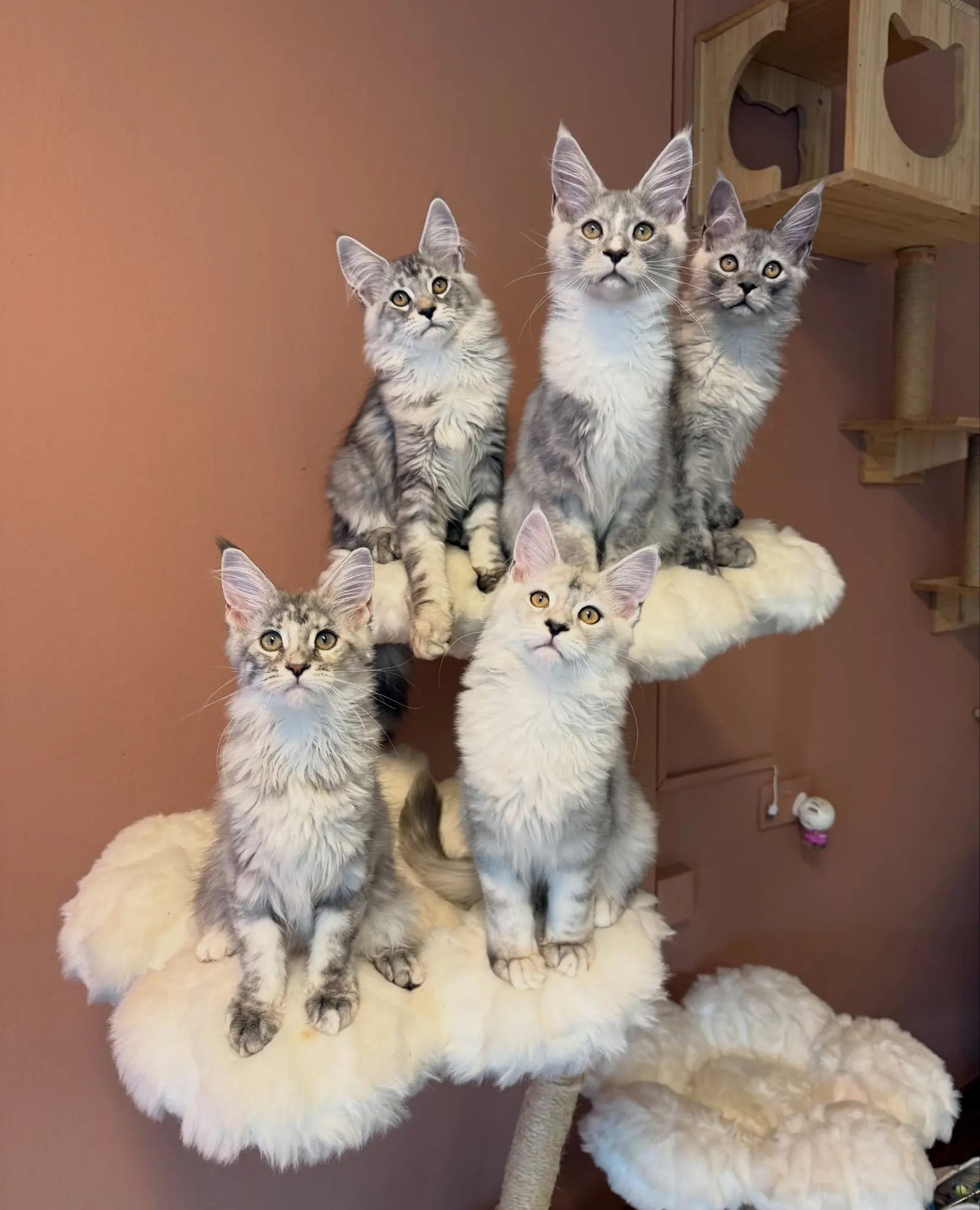
If a Maine Coon sounds right, come and meet ours. We are an AVS-licensed pet shop (licence AS24E00026) in Joo Chiat. Our kittens come from partner catteries in the UK, France, Germany and Denmark, and their pedigrees are issued by WCF, TICA or CFA, depending on the cattery. Our litters come in a mix of colours.
See who is available on our available Maine Coon kittens page or on Instagram @mainecoon.sg, and book a private viewing. As our FAQ says, you get a copy of the parents' genetic tests. If a Ragdoll suits you better, choose one from an AVS-licensed seller who shows you the parents' results.
Questions about Maine Coons and Ragdolls
Which is bigger, a Maine Coon or a Ragdoll?
On the registries' own wording, they are about the same. CFA uses the same sentence for the males of both breeds: reaching or passing 20 lb, about 9 kg, is not unusual, and females are smaller. A Maine Coon's tufted ears, ruff and shaggy coat can make it look bigger. Both keep growing for years, so a kitten's parents are the best guide to its adult size.
Is a Maine Coon or a Ragdoll better for an HDB flat?
Both can live well in a flat, and an HDB flat may keep up to two cats, so you can even have one of each. A Ragdoll is less active and needs less grooming. A Maine Coon needs more play, a tall, sturdy cat tree and more brushing. Either way, the cat must be microchipped and licensed with AVS, and windows need mesh, grilles or screens.
Do Ragdolls really go limp when you pick them up?
Not usually. The story goes back to the breed's founder, but CFA says going limp isn't typical of today's Ragdolls, and GCCF calls it hype. Ragdolls have the same physical responses and pain threshold as other cats, so pick one up with the same care.
Which lives longer, a Maine Coon or a Ragdoll?
There is no clear winner. UK vet records give a life expectancy at birth of 9.71 years for Maine Coons and 10.31 years for Ragdolls, and the margins of error overlap. In Swedish insurance data from 2003 to 2006, 74% of Maine Coons lived to 10, against 63% of Ragdolls. Life expectancy at birth includes early deaths, so a cat that reaches adulthood can expect longer.
Which health tests should a kitten's parents have?
For a Maine Coon, ask for the HCM DNA test (A31P), the SMA test, hip X-rays and recent heart scans. For a Ragdoll, ask for the HCM DNA test (R818W) and heart scans. A negative DNA test doesn't prove a healthy heart, because HCM also turns up in cats that test negative, so the heart scans matter too.
See who is available now, or visit our cattery in Joo Chiat by appointment.