Facts on this page come from the 2025 orange-gene studies, the Maine Coon standards and rules of CFA, FIFe, GCCF and WCF, and veterinary and other published sources, checked in November 2026. Each one links to its source.
Red, ginger, orange or cream: one colour, many names
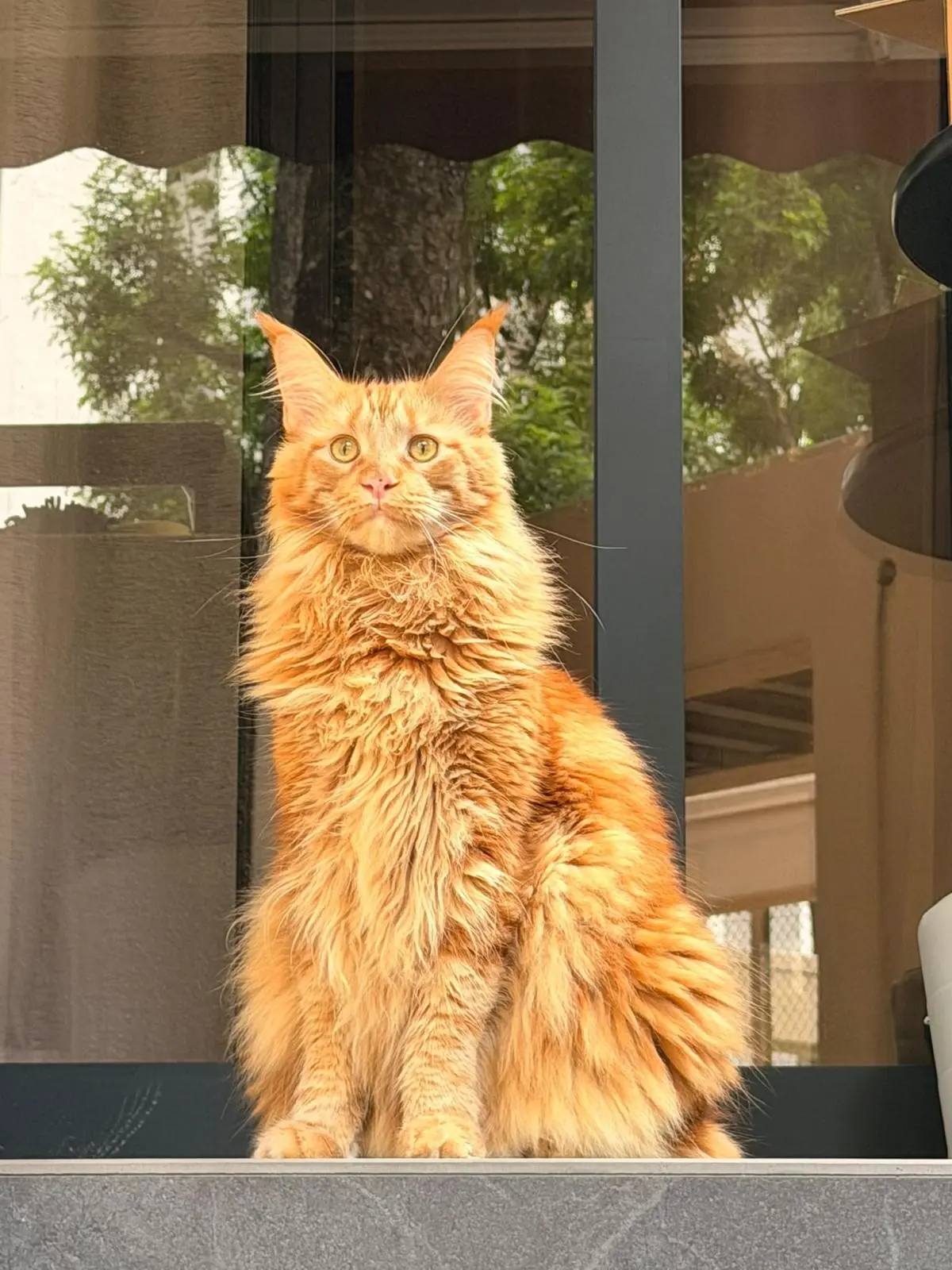
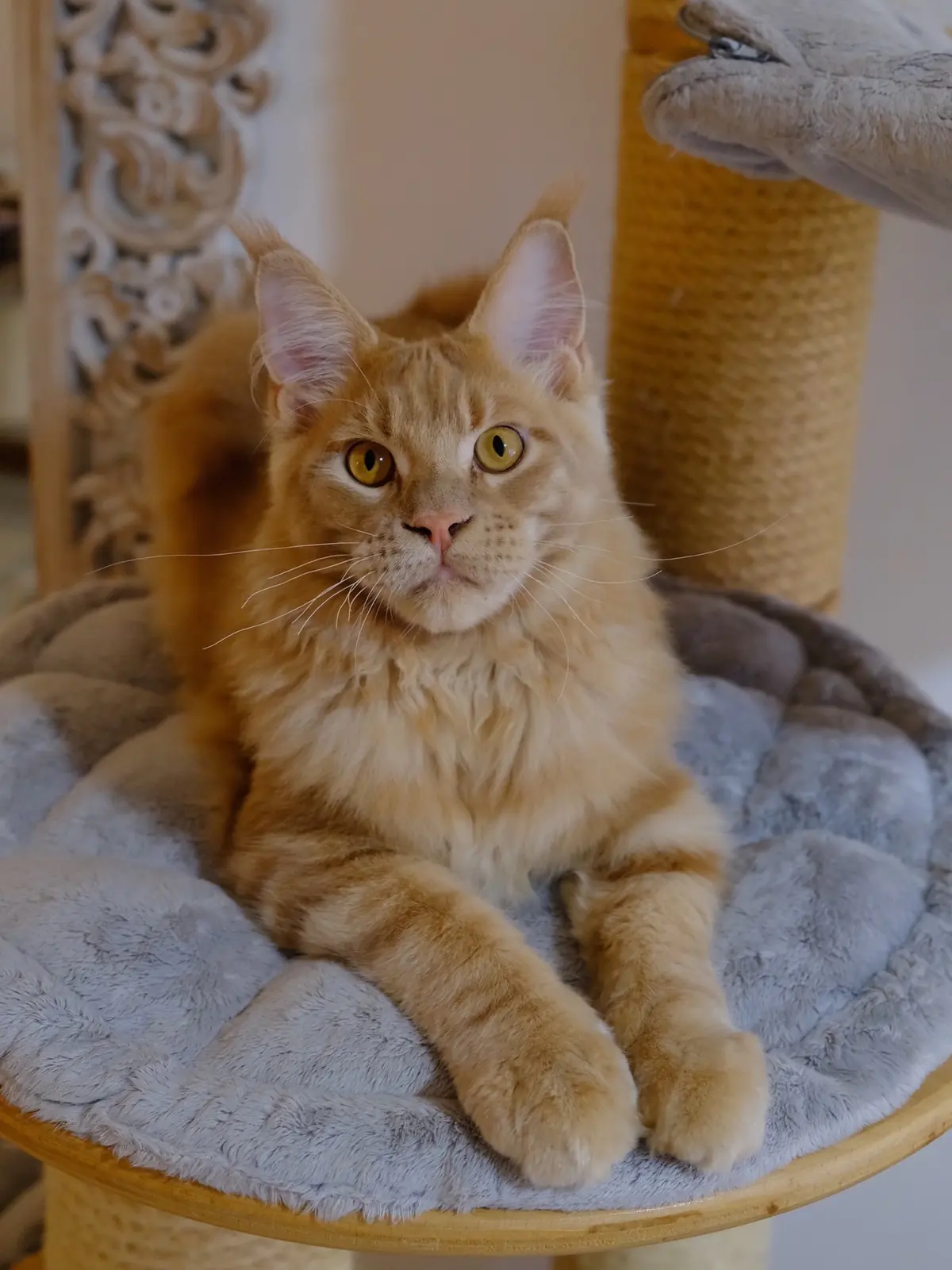
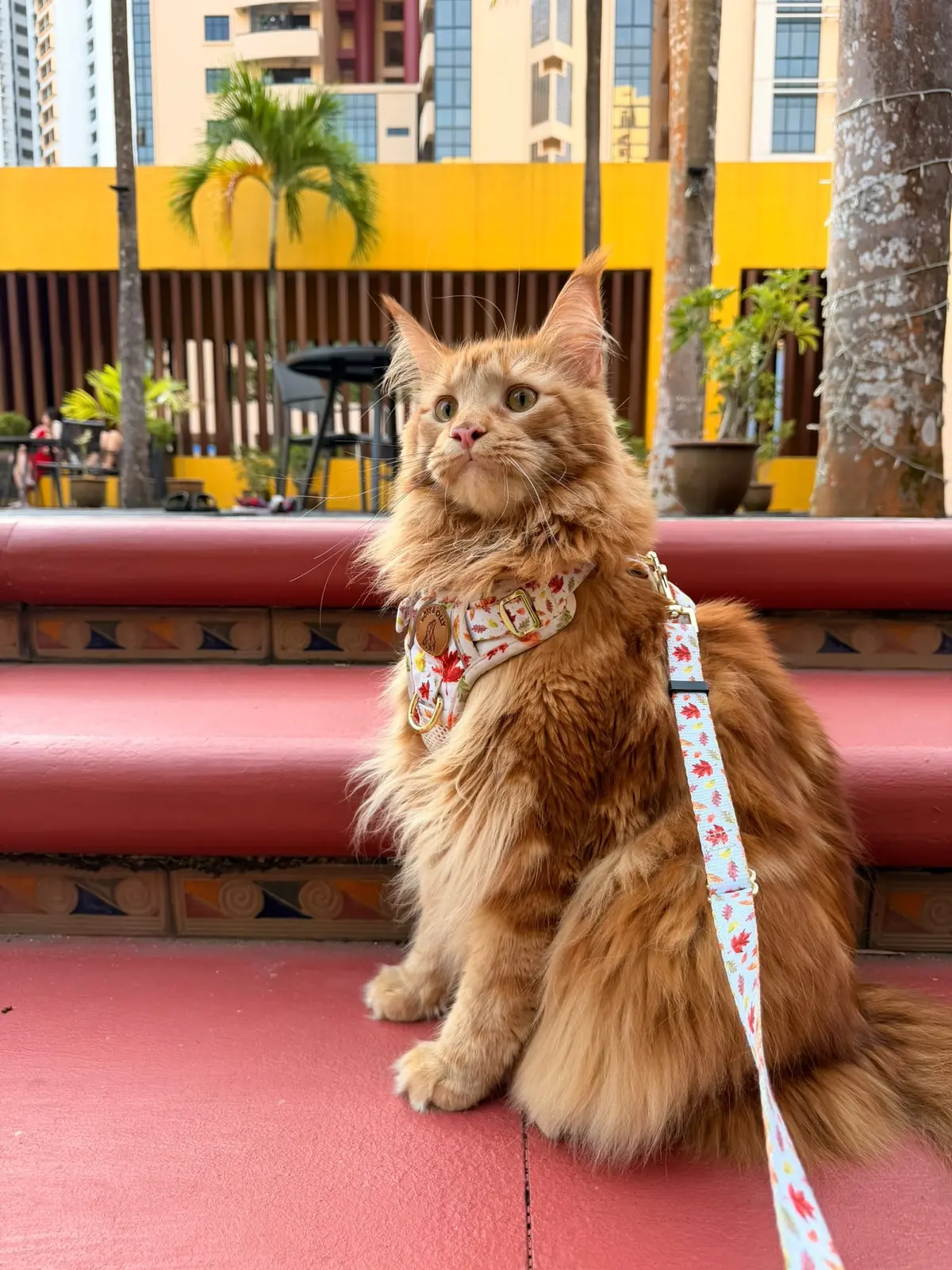
Orange, ginger and marmalade are everyday words. Breed registries call the colour red, and its paler, diluted form cream (CFA, GCCF). A red Maine Coon cat can be a tabby, a solid, a silver or a smoke, with or without white. Our Maine Coon colours guide covers the other colours.
Show reds are also deeper and richer than the sandy ginger of an ordinary tom cat. GCCF puts this down to rufus polygenes, a group of still-unidentified genes built up by selective breeding (GCCF).
European pedigrees write the colour as an EMS code: d for red, e for cream and s for silver, then a number for the pattern (FIFe, WCF). CFA uses words instead, and calls the red silvers cameo (CFA). Here is one code, decoded:
MCOMaine Coon
dred
ssilver
22classic tabby
09with white
| Colour | EMS code | CFA name |
|---|---|---|
| Red | d | Red |
| Red tabby | d 22, d 23 | Red tabby |
| Cream | e | Cream |
| Red silver tabby | ds 22, ds 23 | Cameo tabby |
| Red smoke | ds | Cameo smoke |
| Red shaded | ds 11 | Shaded cameo |
| Red shell | ds 12 | Shell cameo |
22 is classic tabby and 23 mackerel. In the codes, creams use e in place of d. Sources: FIFe, WCF, GCCF, CFA.
Shell and shaded cameo kittens are born white, and the red tips come in over weeks to months (CFA Hints).
The 2025 discovery: the gene change behind orange
Scientists have known for more than a century that the orange gene sits on the X chromosome (OMIA). The change itself was pinned down only recently: teams at Kyushu University in Japan (Toh et al.) and at Stanford (Kaelin et al.) published it back to back in Current Biology on 15 May 2025 (Science News). Both found the same thing:
- A piece of DNA is missing. Orange cats lack about 5 kb (some 5,000 letters) of DNA in a non-coding part of a gene called ARHGAP36, so the protein it makes is unchanged (OMIA, Kyushu University).
- The gene switches on in pigment cells. ARHGAP36 normally works in nerve and hormone tissue. With that piece gone, it also switches on in the pigment cells of the hair (Stanford Medicine).
- Black pigment turns orange. In those cells, ARHGAP36 helps break down PKA, a protein that drives black pigment, so the cells make orange pigment instead (OMIA, Kaelin et al. 2025).
- The stripes can't be hidden. This happens further down the chain than the agouti switch that hides tabby stripes on solid cats, so red cats nearly always show some stripes (Kaelin et al. 2025).
The missing piece matched orange colour perfectly in 188 further cats, and every orange cat in a global database of 258 cats carried it. It probably arose only once, more than 900 years ago (Kaelin et al. 2025, Science News).
Why most ginger cats are boys
A boy has one X chromosome and one Y. If his X carries orange, he is red. A girl has two X chromosomes and is red only if both carry orange. With one orange X and one without, she is a tortie, or a calico if she has white too (Kyushu University, Stanford Medicine).
True or not: 80% of ginger cats are male. The figure is repeated widely, from the US to Malaysia (NPR, The Tech Interactive, The Star). We found no study that has counted it, and the share depends on how common the orange gene is locally.
Call q the share of X chromosomes that carry orange. About q of boys are then orange, but only about q × q of girls, so boys make up 1 ÷ (1 + q) of orange cats. That is exactly 80% when q is 0.25, and about 84% at the UK's 1999 estimate of 19.7% (Leaman et al. 1999). The arithmetic is ours. And q varies: in France, orange was commoner in rural cats than city cats (Pontier et al. 1995).
UK estimate: Leaman et al. 1999. The other rows are examples; the arithmetic is ours.
How red girls happen
In a pedigree litter, the parents' colours set the odds. A father passes his X only to his daughters, and a mother passes one of her two to each kitten:
| Parents | Sons | Daughters |
|---|---|---|
| Red father × red mother | All red | All red |
| Red father × tortie mother | About half red, half not | About half red, half tortie |
| Red father × non-red mother | None red | All tortie |
Red includes cream, the same gene diluted. The halves are averages, and litters vary. Our working, from the X rule above.
So when both parents are red, every kitten is red or cream, daughters included. Among ordinary cats only about one ginger in five is a girl. If you are hoping for a red or cream girl, WhatsApp us and ask about the parents' colours. Finding a particular colour or sex can mean a wait, as CFA notes (CFA).
Red tabby or solid red?
Because orange works further down the chain than the agouti switch, even a genetically solid red nearly always shows faint ghost stripes, at least on the face (GCCF, Kaelin et al. 2025).
GCCF accepts that solid reds may well show tabby marks, while CFA's ideal solid red has none and FIFe allows only slight shading on the face and legs (GCCF, CFA, FIFe). GCCF offers three clues (GCCF):
- Eye rings: a solid red has light red rings round its eyes, not white ones.
- Chin: a tabby keeps a white chin even when it is registered without white, so a red chin points to a solid.
- Parents: a red or cream with a tabby or shaded parent must be registered as tabby or shaded, unless a DNA test shows it is genetically solid (GCCF).
So solid red is a matter of genes. The parents' colours can settle it; otherwise an agouti DNA test from a cheek swab does (GCCF). The coat alone can't.
Red kittens are usually born with tabby marks that may never fully fade (CFA Hints). On a long, full adult coat the marks look softer (GCCF), so a red tabby kitten's crisp stripes will soften as it grows.
Cream is dilute red
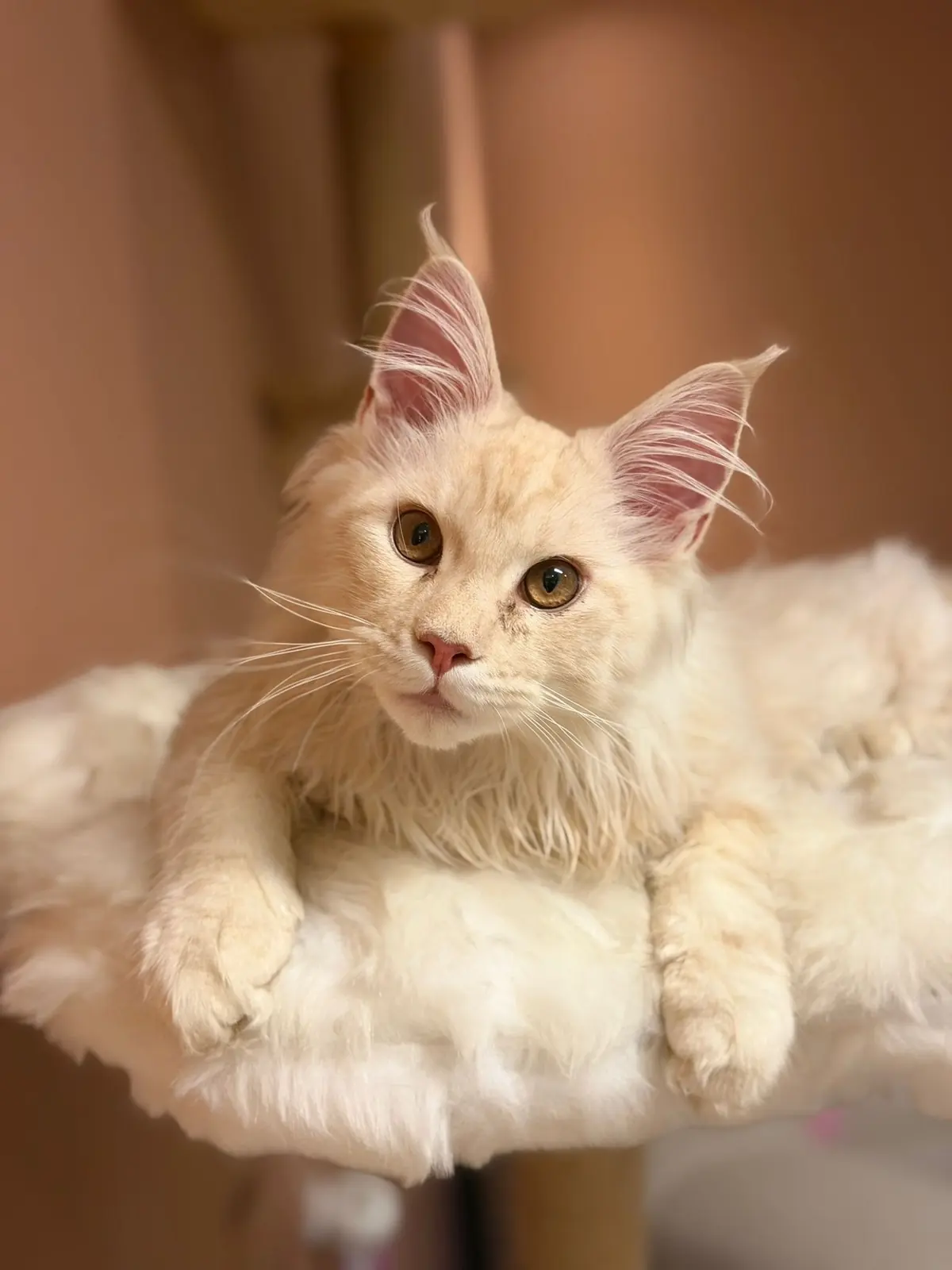
A cream is a red cat with two copies of the dilute gene, one from each parent. The gene clumps the pigment in each hair, so the colour looks paler: black softens to blue, and red to cream (GCCF). A cream kitten's faint tabby marks usually clear by about nine months (CFA Hints).
CFA wants an even, warm buff cream, FIFe a pale pastel with no warm tone, and both ask for pink nose leather and paw pads (CFA, FIFe).
Add the silver gene and you get some of the palest coats in the orange family: cream smoke, shaded cream and shell cream in CFA's words, or MCO es, es 11 and es 12 in EMS (CFA, GCCF, FIFe).
Torties, calicos and the rare male tortie
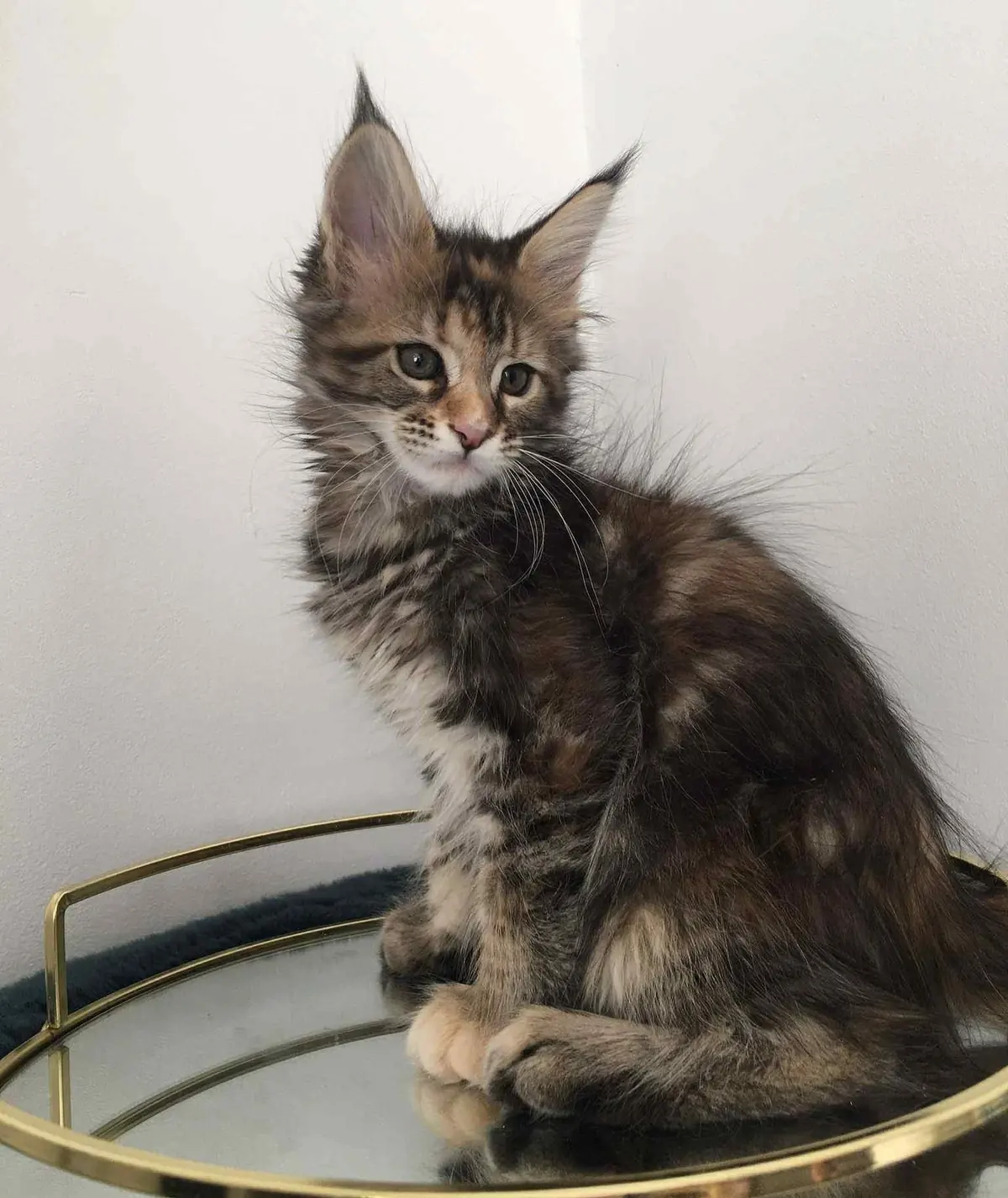
A tortie girl has orange on one X and not on the other. Early in her development, each cell switches off one of its two X chromosomes at random, so some patches of skin grow orange fur and others black (Kyushu University). A calico, a tortie with white, also has the white-spotting gene, which lets the colours form bigger patches (Kaelin et al. 2025). Tortie kittens often have a grey undercoat that disappears as they mature (FIFe).
A boy can only be a tortie if he has two X chromosomes. Most male torties are XXY cats, or mosaics or chimeras, whose bodies mix two sets of cells. They are rarely fertile, as their testes are usually underdeveloped (Foster 2022). A fertile male tortie was described in 2020 (Bugno-Poniewierska et al.), so most are sterile, but not all. How rare they are is unclear: estimates vary widely, and we could not trace the popular figure of 1 in 3,000 to any study.
Freckles on red and cream cats
Orange cats can get small black freckles on the lips, nose, eyelids and gums. Vets call this lentigo simplex. The spots are harmless and not precancerous (MSD Veterinary Manual), and they are the only documented effect of the orange gene apart from coat colour (Kaelin et al. 2025). MSD says they start before the first birthday, The Tech Interactive around two years.
Show rules differ: FIFe allows dark spots on the nose and lips of red and cream solids, while WCF wants none on the nose (FIFe, WCF). In a pet they are only cosmetic.
A spot that becomes raised or lumpy.
Small black freckles on the lips, nose, eyelids or gums.
A spot that changes quickly, or bleeds.
Freckles that look the same in your photos month after month.
A small scab on a pink nose that flakes off and comes back (Cornell).
Pale skin kept out of the midday sun.
Photograph your cat's freckles now and then to spot changes, and show your vet any red flag. That is general vet advice rather than a rule from one study.
Are ginger cats friendlier?
Orange cats have a name for being friendly. The 2012 study often cited for this asked 189 people to rate cats of different colours, and they rated orange cats friendlier. It measured people's impressions, and its lead author said there was little evidence the differences are real (UC Berkeley).
The 2025 gene teams looked at this too. The Stanford team found no difference in ARHGAP36 activity between orange and other cats in the kidney, heart, brain or adrenal glands, the tissues it tested. It suggested the friendly reputation may mostly come from the fact that most gingers are boys (Stanford Medicine). Kyushu's lead scientist said there is no scientific evidence yet of a link between coat colour and personality (Kyushu University).
Whatever the colour, Maine Coons are known for being playful, people-oriented and interactive; see our Maine Coon features page. If you are choosing between a boy and a girl, our male or female guide can help.
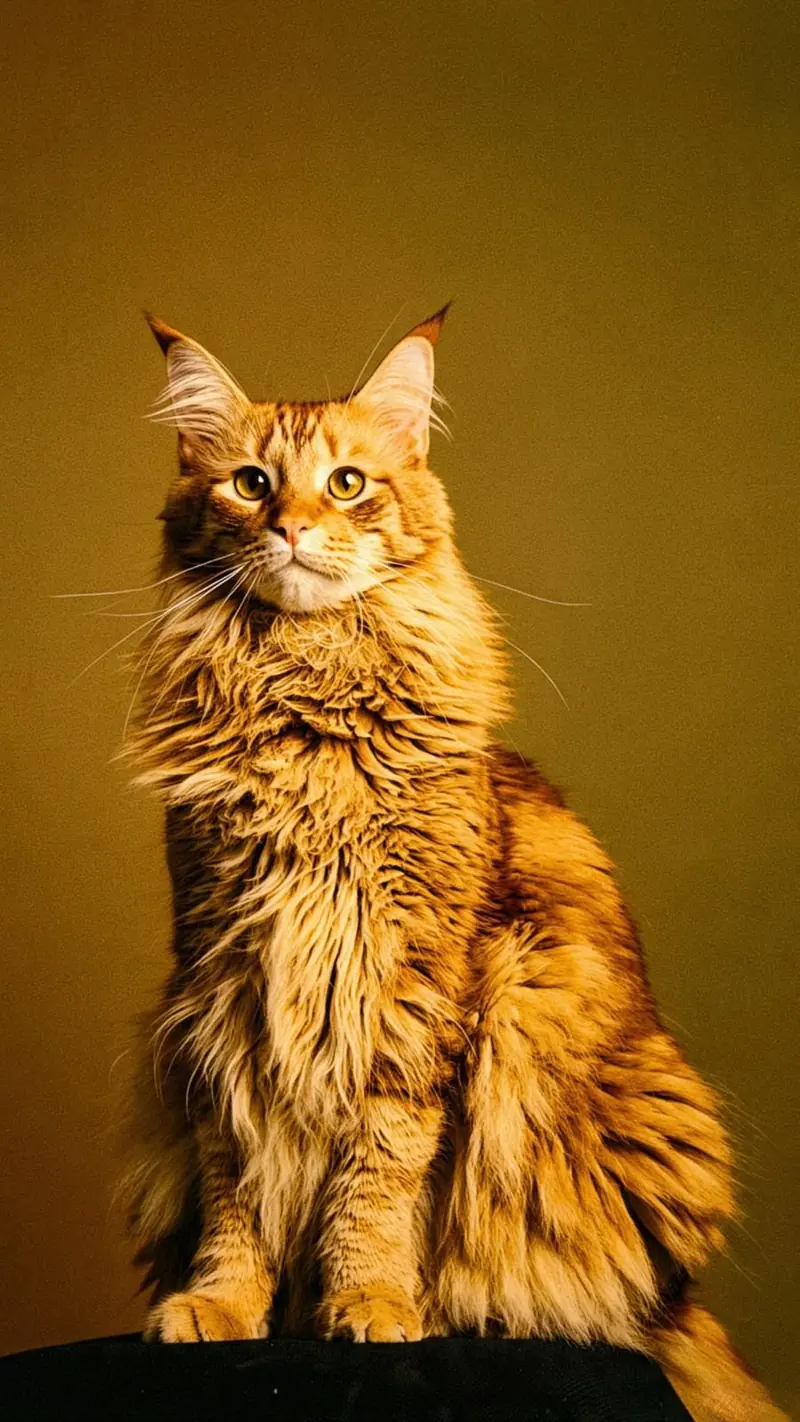
Our red and cream kittens
We are an AVS-licensed pet shop in Joo Chiat (licence AS24E00026), and our kittens come from partner catteries in the UK, France, Germany and Denmark. Their pedigrees are issued by WCF, TICA or CFA, depending on the cattery. Litters come in a mix of colours, and the parents decide whether there are reds, creams or red girls.
To see who is available now, visit our available Maine Coon kittens page or follow us on Instagram @mainecoon.sg. You can also book a private viewing to meet them, and our FAQ covers kitten health and how to reserve. Ask us for photos of the parents and the colour code on the pedigree: together they tell you more about the adult coat than a kitten's coat at 12 weeks. WhatsApp us with any question.
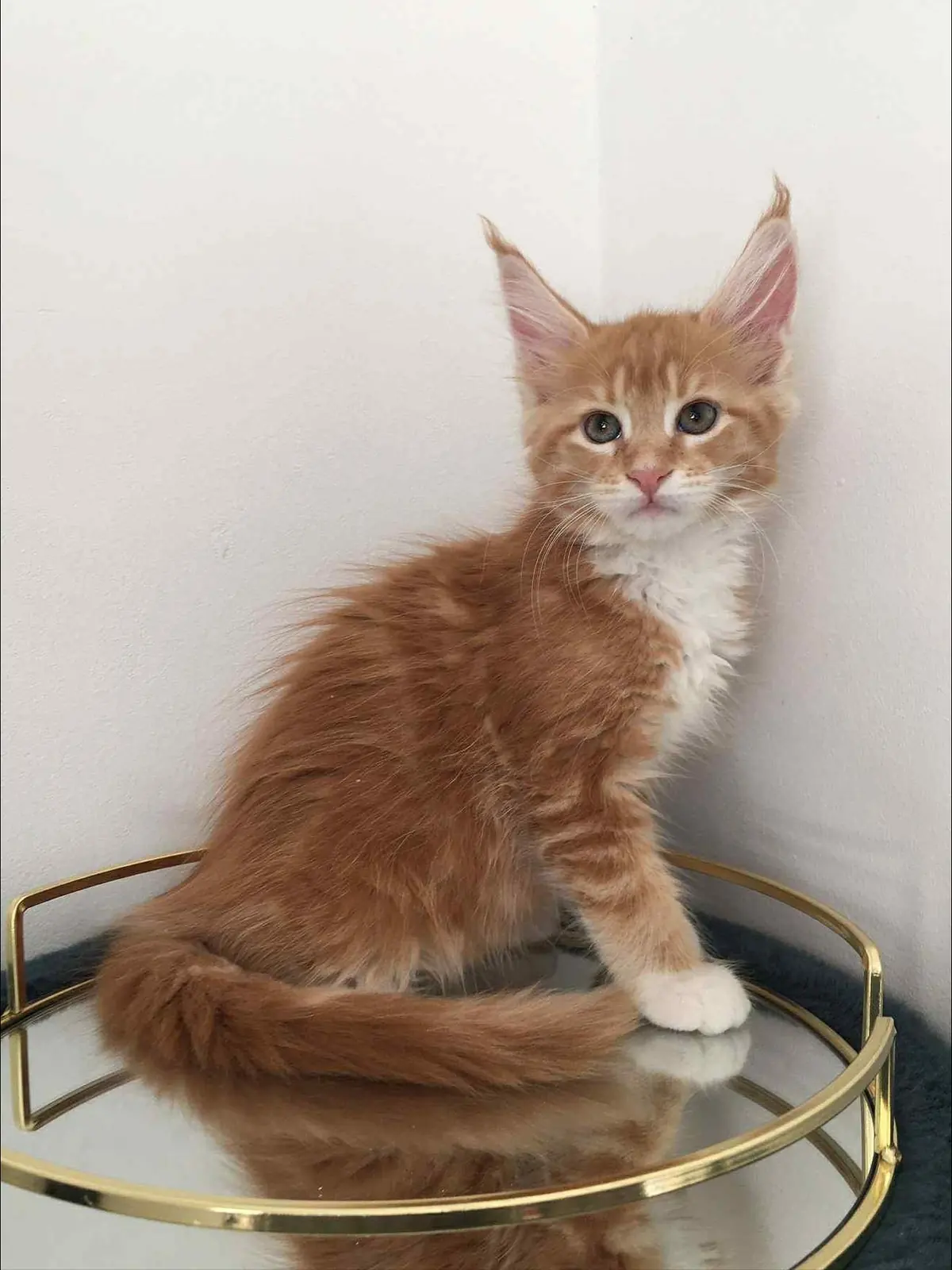
Questions about orange Maine Coons
Are all orange Maine Coons male?
No. Most orange non-pedigree cats are boys, about four in five by the usual rule of thumb, because the orange gene is on the X chromosome: a boy needs one copy, a girl needs two. In a pedigree litter the parents decide. A red father and a red mother have only red or cream kittens, girls included.
Can a Maine Coon be solid red?
Yes, but a solid red nearly always shows faint ghost stripes, at least on the face, because the orange gene works around the switch that hides tabby marks. A red chin and light red eye rings point to a solid. The parents' colours or an agouti DNA test can settle it.
What is a cream Maine Coon?
Cream is dilute red: a red cat with two copies of the dilute gene, which clumps the pigment so the colour looks paler. Creams have pink noses and paw pads. With the silver gene as well, a cream becomes a cream silver, with a very pale coat.
Can a male Maine Coon be a tortie?
Rarely. A male needs two X chromosomes to show both black and red, so most male torties are XXY cats, mosaics or chimeras. They are usually sterile, though a few fertile ones have been recorded.
Why does my orange cat have black freckles?
Orange cats can get small black freckles on the lips, nose, eyelids and gums, called lentigo simplex. They are harmless and not precancerous. Photograph them now and then, and show your vet any spot that becomes raised, changes quickly or bleeds.
See who is available now, or visit our cattery in Joo Chiat by appointment.